Workplace Social Anxiety & LSAS: Actionable Coping
Feeling overwhelmed by social interactions at work? You're not alone. The pressure to present in meetings, network with colleagues, or even make small talk by the coffee machine can feel immense. Workplace social anxiety silently sabotages careers and well-being. Unlike typical shyness, it’s a deep-rooted fear of being judged during everyday professional interactions—like presenting or networking.

Feeling drained by workplace interactions? By using the Liebowitz Social Anxiety Scale (LSAS), you can identify exactly which professional scenarios fuel your stress. More importantly, we’ll provide concrete, actionable strategies to help you navigate challenging work situations with greater confidence. Understanding the "what" and "why" behind your anxiety is the first step toward reclaiming your comfort and thriving professionally. To get a baseline understanding of your own social comfort levels, you can begin your confidential assessment on our platform.
Understanding Your Workplace Social Anxiety Triggers with LSAS
The first step to managing anxiety is identifying what causes it. A vague feeling of "stress at work" is hard to tackle, but knowing that "team presentations on Wednesdays" are the primary issue gives you a specific problem to solve. This is where the Liebowitz Social Anxiety Scale becomes an invaluable tool.
Identifying Common Professional Social Triggers
Workplace social anxiety can manifest in various situations. While everyone's experience is unique, some professional triggers are particularly common. See if any of these resonate with you:
- Public Speaking and Presentations: The fear of standing before a group, worried about stumbling over words or being judged for your ideas.
- Team Meetings: Anxiety about speaking up, offering an opinion, or being put on the spot with a question.
- Networking Events: The pressure to make small talk, introduce yourself to strangers, and build connections in a crowded room.
- Performance Reviews: A high-stakes conversation where you are the center of attention and your work is being evaluated.
- Informal Socializing: Casual chats in the breakroom or attending after-work events can feel just as daunting as formal tasks.
- Conflict or Disagreement: The fear of expressing a dissenting opinion or having a difficult conversation with a colleague or manager.
Recognizing your specific triggers is a powerful act of self-awareness. It moves the problem from a vague, overwhelming feeling to a set of specific, manageable challenges.

How LSAS Uncovers Your Specific Workplace Fears
The LSAS goes beyond generic quizzes. Backed by science, it measures exactly how social scenarios impact your stress levels and behavior. Its 24 questions detail specific scenarios, many of which are directly applicable to the modern workplace—from talking to people in authority to giving a presentation.
For each scenario, the LSAS asks you to rate two things:
- Fear: How anxious or fearful do you feel in that situation?
- Avoidance: How often do you avoid that situation?
By completing the LSAS, you get a clear, quantified breakdown of your personal anxiety landscape. You might discover that while you have a moderate fear of team meetings, your avoidance of them is extremely high. This insight is crucial because it shows you exactly where to focus your energy. The LSAS helps transform your general anxiety into a clear, personalized map of your professional challenges.
Decoding Your LSAS Score: Insights for Your Work Life
Once you complete the LSAS assessment, you receive a score. But this number is more than just a label; it’s a key that unlocks a deeper understanding of your professional life. Interpreting your results correctly is the bridge between assessment and action.
Interpreting Fear & Avoidance in Professional Contexts
Your total LSAS score gives you an overall indication of social anxiety severity, but the real magic lies in the two subscores: Fear and Avoidance.
- The Fear Score reflects the level of emotional distress you experience. In a professional context, a high fear score might mean you feel intense panic before a presentation or your heart pounds when your boss asks you a direct question. It's the internal emotional storm.
- The Avoidance Score reflects your behavioral response to that fear. A high avoidance score means you actively change your behavior to escape feared situations. This could mean calling in sick on presentation day, staying silent in meetings even when you have great ideas, or turning down promotions that involve more leadership.
Sometimes, these scores tell a surprising story. You might have a high Fear score but a low Avoidance score, meaning you push through stressful situations despite feeling terrified. Conversely, you might have moderate Fear but high Avoidance, indicating that you’ve structured your entire career around avoiding triggers. Understanding this dynamic is the first step to creating change. You can discover your score in just a few minutes with our confidential online test.
From Score to Self-Awareness: Your Unique Workplace Profile
Your LSAS score is the starting point for building your unique workplace anxiety profile. It allows you to move beyond "I'm bad at networking" to a more nuanced understanding like, "My fear of initiating conversations with strangers is a 3 out of 3, and I avoid it completely."
This level of self-awareness is empowering. It helps you:
- Pinpoint Strengths and Weaknesses: You might realize you are perfectly comfortable in one-on-one conversations with authority figures but struggle in group settings.
- Set Realistic Goals: Instead of trying to "cure" your anxiety overnight, you can set a small, achievable goal, like speaking once in the next team meeting.
- Communicate More Effectively: If you decide to seek support, you can provide a therapist or a trusted mentor with specific, data-backed information about your challenges.
Your score isn't a final judgment. It's a personalized diagnostic tool that gives you the clarity needed to develop targeted, effective coping strategies.
Actionable LSAS Coping Strategies for Work Situations
Understanding your triggers and score is essential, but it’s what you do with that knowledge that truly matters. Here are practical, actionable strategies tailored to common high-stress work scenarios.

Mastering Meetings: Strategies for Participation & Presenting
Meetings and presentations are often the biggest hurdles. Instead of avoiding them, try these techniques to manage your anxiety.
- Prepare One Talking Point: Before a meeting, review the agenda and prepare just one relevant question or comment. Knowing exactly what you want to say reduces the pressure to improvise.
- Speak Early: The longer you wait to speak, the more anxiety builds. Try to make your comment early in the meeting to get it over with.
- Focus on the Message: When presenting, shift your focus from your anxiety to the information you want to share. Your goal is to deliver a message, not to give a flawless performance.
- Practice Grounding: Right before you speak, press your feet firmly into the floor and take a few slow, deep breaths. This simple physical action can help calm your nervous system.
Networking & Socializing: Building Confidence Step-by-Step
Networking doesn't have to be a nightmare. Approach it with a clear plan and realistic expectations.
- Set a Small, Specific Goal: Don't aim to "network the whole room." Instead, set a goal to have one meaningful conversation with one person.
- Prepare Your Opener: Have a simple, open-ended question ready, such as, "What project are you most excited about right now?" or "How have you been finding this event?"
- Be a Good Listener: Take the pressure off yourself to talk by focusing on listening. People appreciate being heard, and it gives you time to think of what to say next.
- Have an Exit Plan: Knowing you can leave a conversation gracefully reduces the fear of getting trapped. A simple, "It was great chatting with you, I'm going to grab a drink now," works perfectly.
Navigating Conflict & Authority Interactions
Social anxiety can make it difficult to advocate for yourself. Learning to set boundaries and communicate clearly during tense moments is a critical skill for managing your energy and well-being at work.
Communicating Your Needs & Setting Boundaries Professionally
- Use "I" Statements: Frame your needs from your own perspective. For example, say, "I find it easier to process information when I have an agenda beforehand," instead of, "You need to send the agenda earlier."
- Schedule Buffer Time: If you know a big presentation will drain you, block off 30 minutes on your calendar afterward for quiet time to decompress.
- Practice Saying "No": It’s okay to politely decline optional social invitations if you don't have the capacity. A simple, "Thanks so much for the invite, but I won't be able to make it this time," is sufficient.
Sustaining Growth: Long-Term Workplace Anxiety Management with LSAS
Managing workplace social anxiety is a journey, not a destination. Creating lasting change involves continuous self-reflection and knowing when to seek additional support.
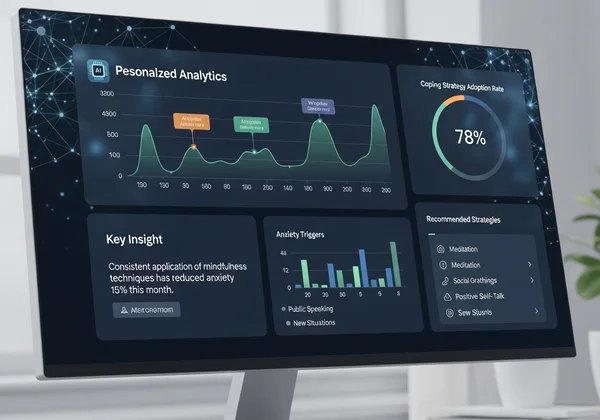
Leveraging AI Reports for Personalized Workplace Insights
While your LSAS score provides a fantastic snapshot, a deeper analysis can accelerate your growth. At LSAS.me, we offer an optional AI-powered report that goes beyond the numbers. This personalized analysis connects your specific answers to real-world workplace scenarios, offering tailored insights into:
- Your Unique Trigger Patterns: The report can highlight connections you might not have noticed, such as a consistent fear of situations involving performance evaluation.
- Personal Strengths and Challenges: It identifies not only what you struggle with but also the social situations where you likely feel more comfortable.
- Actionable Growth Suggestions: Based on your unique profile, the AI provides personalized tips and strategies that are most relevant to you.
This report acts as a personalized roadmap, helping you move from general advice to a specific, actionable plan. After getting your score, you can choose to unlock your AI report for these deeper insights.
When to Seek Professional Support for Workplace Anxiety
Self-help tools and strategies are incredibly powerful, but they are not a substitute for professional medical advice. The LSAS is an assessment tool, not a diagnosis. If your social anxiety is significantly impacting your job performance, your well-being, or your ability to advance in your career, it may be time to speak with a mental health professional.
Mental health professionals offer tools like CBT to create coping strategies tailored to your needs—helping you thrive long-term. Sharing your LSAS results with them can be an excellent starting point for a productive conversation.
Empower Your Professional Journey: Your Next Steps
Workplace social anxiety doesn't have to define your career. By understanding your specific triggers, decoding what they mean, and applying targeted coping strategies, you can regain control and build the confidence to thrive.
Self-awareness is the first, most crucial step. The Liebowitz Social Anxiety Scale provides a clear, objective starting point for this journey. It replaces vague fears with concrete data, empowering you to take focused, effective action. Celebrate progress, not perfection—even asking one question in a meeting proves you’re moving forward.
Ready to take that first step?
Assess your workplace triggers now on our website today. Get your instant score and begin your journey toward a more confident and fulfilling professional life.
Frequently Asked Questions About Workplace Social Anxiety & LSAS
What is the Liebowitz Social Anxiety Scale (LSAS)?
The Liebowitz Social Anxiety Scale (LSAS) is a widely used and scientifically validated questionnaire designed to assess the severity of social anxiety. Developed by Dr. Michael Liebowitz, it consists of 24 questions that ask you to rate your level of fear and avoidance in various social and performance situations. It is considered a gold standard for measuring social anxiety.
How can an LSAS score help me understand my workplace anxiety?
Your LSAS score provides a clear, quantitative measure of your social fears and avoidance behaviors. It helps you move from a general feeling of being "anxious at work" to identifying specific triggers—like public speaking, interacting with authority, or attending social events. This clarity allows you to develop targeted strategies for the situations that challenge you most.
Do I have social anxiety or am I just shy at work?
Shyness is a personality trait characterized by feeling reserved or timid in new situations. It doesn't typically cause significant distress. Social anxiety, or social phobia, is a clinical condition involving intense fear of being judged or humiliated, leading to significant distress and avoidance that interferes with your life and career. An LSAS assessment can help clarify the severity and impact of your feelings.
What are the grades of social anxiety, and what does it mean for my career?
LSAS scores are typically categorized into grades of severity, such as mild, moderate, marked, or severe social anxiety. For your career, mild anxiety might make networking uncomfortable, while severe anxiety could lead you to avoid promotions, collaborations, or even your job altogether. Understanding your level helps you grasp the impact it's having and the level of support you may need.
How do I get an LSAS score and a personalized report?
You can get your LSAS score quickly, confidentially, and for free. Simply visit our website and complete the 24-question assessment. Your results are calculated instantly. After you receive your score, you will have the option to unlock a comprehensive, AI-powered analysis for even deeper, personalized insights into your workplace social anxiety. You can get started here.