Understanding LSAS Scores with Comorbid Conditions
The complexity of social anxiety often goes beyond a single diagnosis. Many individuals experience social anxiety alongside conditions like depression, ADHD, or autism spectrum disorder. This creates unique challenges that require a specialized understanding of how different symptoms interact. Do you find it hard to tell if your social struggle comes from anxiety or something else? If you have taken the Liebowitz Social Anxiety Scale (LSAS) and suspect or know you have other conditions, interpreting your results can be particularly challenging.
This guide will help you understand how social anxiety manifests when paired with other mental health conditions. We will explore how to make sense of your LSAS score within this complex context. By looking at the overlap between these conditions, you can gain a clearer picture of your mental health. To get started with a baseline of your symptoms, you can try our free tool to see where you currently stand on the scale.
Getting to the root of what's behind your social discomfort can be transformative—it's often the key to finding relief. Whether you are a student, a professional, or someone simply looking for answers, this article provides the clarity you need to move forward.

Social Anxiety and Depression: Navigating the Dual Diagnosis
Social anxiety and depression frequently occur together. In clinical terms, this is often called "comorbidity." Social anxiety and depression don't simply coexist—they actively influence and worsen each other. This interaction makes your LSAS results different from those of someone with only social anxiety.
How Depression Amplifies Social Anxiety Symptoms
Depression typically brings low energy, feelings of worthlessness, and emotional numbness. When combined with social anxiety, these symptoms create a heavy burden, making everyday social interactions feel overwhelming and exhausting. For example, social anxiety makes you fear judgment from others, while depression might make you feel that you aren't "good enough" to be around others in the first place.
This combination often leads to a cycle of extreme isolation. You might avoid a party because you are afraid of being embarrassed (anxiety). However, you might also stay home because you feel you don't have the energy to talk to anyone (depression). This secondary layer of depression can make the "Avoidance" section of the LSAS test significantly higher. If you want to see how your habits align with these symptoms, you can start your test now.
Interpreting LSAS Scores When Depression is Present
When you look at your LSAS score meaning while struggling with depression, you must look at the balance between "Fear" and "Avoidance." People with pure social anxiety often have high fear scores that lead to avoidance. However, if you have depression, your avoidance score might be much higher than your fear score.
This happens because depression reduces your motivation to engage with the world. You might not "fear" a social situation in the traditional sense, but the effort required feels impossible. In this case, a high LSAS score might reflect a lack of social "approach" energy rather than just a phobia. Understanding this nuance is vital for choosing the right support, whether it involves therapy for anxiety or medication for depression.
LSAS with ADHD: Social Challenges Beyond Inattention
Attention-Deficit/Hyperactivity Disorder (ADHD) is about much more than just being distracted. For many adults and teens, ADHD creates significant social friction. When you add social anxiety into the mix, it can be difficult to determine if you are anxious because of your brain's wiring or because of a specific fear of social rejection.
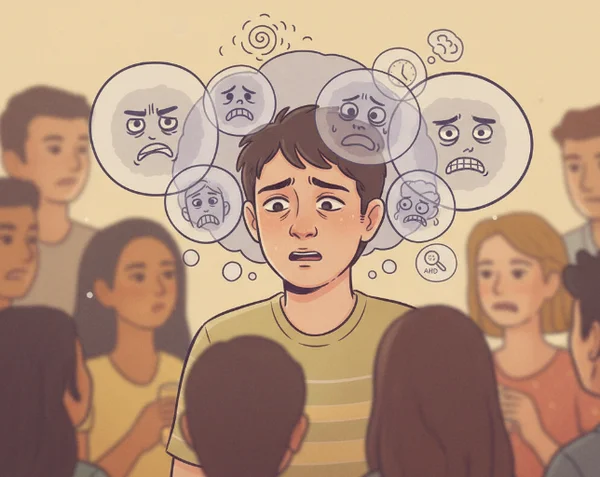
Social Impairment in ADHD: Beyond the Diagnostic Criteria
ADHD can cause "social blunders," such as interrupting others, missing social cues, or forgetting to respond to messages. Over time, these small mistakes can lead to negative feedback from friends, teachers, or colleagues. This constant negative feedback often grows into social anxiety.
A specific concept called Rejection Sensitive Dysphoria (RSD) is common in the ADHD community. RSD causes intense emotional pain in response to perceived rejection or criticism. If you have ADHD and RSD, your LSAS questionnaire results might show extreme spikes in scenarios involving "being criticized" or "speaking to an authority figure." To better understand your specific triggers, you can see your results by taking the online assessment today.
Differentiating Social Anxiety from ADHD-Related Social Difficulties
To interpret your score accurately, ask yourself: "Am I afraid of the social situation itself, or am I afraid of my ADHD symptoms causing a problem?"
- If you avoid a meeting because you fear people will judge your personality, that is likely social anxiety.
- If you avoid a meeting because you are afraid you will lose focus or say something impulsive, that is ADHD-related social difficulty.
On the LSAS, ADHD can cause high scores in performance-based tasks. Because ADHD affects executive function, "giving a report" or "working while being observed" becomes much more stressful. Recognizing that your anxiety is rooted in your ADHD symptoms can help you find more effective coping strategies. These might include organizational tools or specific behavioral coaching.
Social Anxiety and Autism Spectrum: Understanding the Overlap
The relationship between the autism spectrum and social anxiety is deep and common. Many autistic individuals experience social anxiety because the social world is often not designed for their communication style. However, the reasons for social avoidance in autism are often different from those in traditional social phobia.
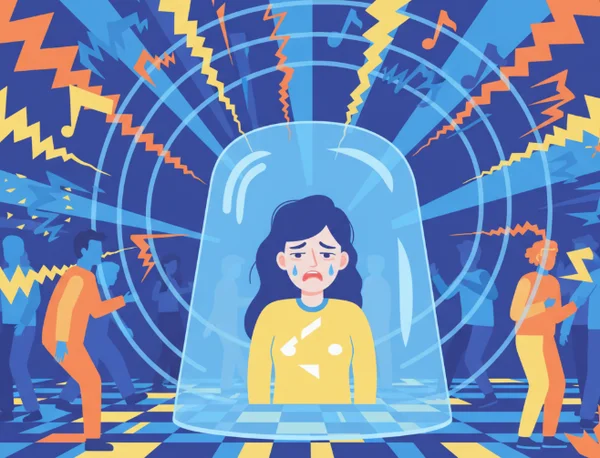
Social Anxiety in Autism: When Does it Occur?
Many autistic people experience social anxiety after years of "masking"—hiding their autistic traits to fit into neurotypical society. This constant effort is exhausting and creates a deep fear of not appearing "normal."
Unlike typical social anxiety, which often stems from irrational fears, an autistic person's anxiety frequently comes from real experiences of being misunderstood or bullied. This means their LSAS scores may be high not just due to fear of judgment, but because social situations are genuinely draining for them. If you are wondering how your social experiences rank, you can use our free LSAS assessment to get an objective measurement.
Adapting LSAS Interpretation for Autism Spectrum Individuals
When an autistic person takes the Liebowitz Social Anxiety Scale, they should consider the role of sensory processing. Some items on the LSAS, like "going to a party" or "eating in public places," might cause anxiety because of loud noises, bright lights, or overwhelming smells.
In these cases, the high score is partly a measure of sensory overload. To get a "cleaner" look at social anxiety, it helps to distinguish between:
- Sensory Avoidance: Staying home because the venue is too loud.
- Social Phobia: Staying home because you are afraid people will look at you.
Using a social anxiety scale designed for the general population is still helpful. However, individuals on the spectrum should look for patterns in their scores. These patterns might point toward specific social "rules" they find confusing or performance situations that require heavy masking.
Moving Forward with Your Understanding
The interplay between social anxiety and other conditions is complex, but understanding this relationship is crucial for effective management. Whether you are dealing with the heavy weight of depression, the impulsivity of ADHD, or the unique perspective of autism, your social anxiety does not exist in a vacuum.
The LSAS offers valuable insights into your symptoms, but its true power emerges when interpreted within your complete psychological profile. Understanding whether your "Avoidance" score might be elevated by depression, or if your "Fear" score stems from ADHD-related rejection sensitivity, helps you find more targeted support.
For a more comprehensive understanding of how your specific combination of conditions affects your social experiences, consider our AI-powered analysis. This tool can provide personalized insights tailored to your unique profile. It helps you bridge the gap between a simple score and a real-life action plan. Taking the first step to understand your social anxiety patterns is empowering, and our tools are designed to support you through that process. Please take the test today to begin your journey of self-discovery.
Frequently Asked Questions About LSAS Scores and Comorbid Conditions
How do comorbid conditions affect LSAS scoring?
Comorbid conditions can "inflate" certain parts of the LSAS. For example, depression can lead to higher avoidance scores. ADHD might lead to higher fear scores in performance situations. It is important to look at the balance of your results rather than just the final number. You can online test your current levels to see where you fall on the standard scale.
Can LSAS differentiate between social anxiety and ADHD-related social difficulties?
The LSAS itself is a screening tool for anxiety symptoms, not a diagnostic tool for ADHD. However, by looking at which scenarios cause the most fear, you can often see a pattern. If your fear is concentrated on tasks requiring focus or memory, ADHD may be a major factor in your anxiety.
What if I have both social anxiety and depression? How should I interpret my results?
If you have both, you might notice that your "Avoidance" score is high across almost all 24 items. This often indicates that depression is sapping your motivation to socialize. If your "Fear" score is also high, you are likely dealing with a dual challenge. This requires addressing both mood and anxiety symptoms simultaneously.
Is the LSAS appropriate for individuals on the autism spectrum?
Yes, the LSAS is a widely used and scientifically validated tool. While it wasn't designed specifically for autism, it is very effective at measuring the level of social distress an individual feels. Autistic individuals find it helpful for quantifying their "social battery." It also identifies which specific types of interaction are the most taxing.
How can I get a more complete picture of my social anxiety with comorbid conditions?
The best way is to combine a standardized test with personalized analysis. By visiting LSAS.me, you can take the 24-question test and then choose to provide additional background information. Our AI-driven report will then analyze your specific triggers. This provides a deeper look at how your lifestyle and other conditions might be influencing your social comfort.
Disclaimer: The LSAS test and the information provided on this website are for educational and informational purposes only. They are not intended to be a substitute for professional medical advice, diagnosis, or treatment. Always seek the advice of your physician or another qualified health provider with any questions you may have regarding a medical or mental health condition.