Track Fear and Avoidance Between LSAS Tests
Why a retest means more when you track the weeks between
Retaking the LSAS can be useful, but a second score means much more when it is connected to real life. Without notes, it is easy to remember one hard day and forget the pattern around it.
A short log helps turn vague stress into clearer information. It can show whether fear is changing, whether avoidance is changing, or whether one is moving faster than the other.
That makes a later LSAS screening tool more useful. It becomes a check-in built on real situations instead of a guess based on the last bad moment. Disclaimer: The information and assessments provided are for educational purposes only and should not replace professional medical advice, diagnosis, or treatment.
What fear and avoidance mean inside the LSAS

The LSAS is useful because it does not only ask whether a situation feels hard. It also looks at what a person does in response to that fear.
The 2 dimensions the test is already measuring
NCBI-published material on the LSAS describes it as a 24-item scale. It rates fear and avoidance across social interaction and performance situations. That 2-part structure matters because someone can feel strong fear in a situation and still push through it, while someone else may avoid the same situation early.
This is why a social anxiety self-check can feel more accurate when both dimensions are considered together. It is not only about internal distress. It is also about what happens in behavior.
Why the two numbers do not always move together
Fear and avoidance do not always move at the same speed. Someone may still attend a meeting, class, or phone call while feeling intense fear before and during it. Another person may avoid the situation quickly and therefore report less visible distress in the moment.
NCBI's StatPearls review on social anxiety disorder describes marked fear or anxiety in social situations involving possible scrutiny and notes that the condition can cause significant distress and functional impairment. That helps explain why behavior and inner experience can move together, but do not always match perfectly on the same day.
What to write down after a difficult social situation
A useful log does not need to be long. It only needs enough detail to capture the situation honestly.
Situation, fear level, and what you expected
Start with the setting. Was it a conversation, a group discussion, a class presentation, a meal, a video call, or a public errand?
Then rate the fear level in a simple way. A 0 to 3 or 0 to 10 scale is usually enough as long as it stays consistent. Write down what you expected would happen, such as embarrassment, judgment, rejection, or saying the wrong thing.
These 3 notes already make the pattern clearer:
- The situation itself.
- The fear level before or during it.
- The outcome you were worried about.
What you avoided, delayed, or pushed through
Next, write down the behavior. Did you cancel, delay, stay silent, leave early, or go through with the situation while feeling distressed?
This matters because avoidance is not always dramatic. Sometimes it looks like postponing a message, skipping eye contact, or turning down one small invitation. A LSAS results page becomes more useful when those daily patterns are visible instead of hidden inside memory.
What happened after the moment passed
Add one final note after the event: what actually happened, and how long it took to calm down. This helps compare predicted danger with real outcomes.
Over a few weeks, that note can reveal an important pattern. The fear may stay high even when the outcome is manageable, or the avoidance may be shrinking before the fear does. Both changes matter.
How to use the log before you retake the LSAS

The goal is not to create a perfect diary. The goal is to notice whether life is getting narrower, easier, or simply more understandable.
Look for patterns, not perfect scores
Before retaking the LSAS, review the entries for 2 simple questions: which situations keep showing up, and what happens most often when they do? That is usually more helpful than comparing one isolated day to another.
A retest becomes more meaningful when it reflects a pattern across several situations. It is less useful when it is taken repeatedly after every rough interaction.
When the pattern means you should not wait
Do not wait for a perfect log if the situation feels unsafe or overwhelming. Seek support sooner if fear and avoidance are severely restricting school, work, relationships, or basic daily functioning.
SAMHSA's National Helpline is free, confidential, and available 24/7, 365 days a year for treatment referral and information. If there is immediate danger or risk of harm, treat it as an emergency and contact local emergency services right away.
If the pattern is becoming more isolating, seek professional help. Do the same if the distress feels hard to manage alone instead of relying on repeat self-testing.
A weekly routine that keeps tracking useful
The best routine is simple enough to keep using.
Keep entries short and private
Write a few lines after the situation, not a full analysis. Short notes are easier to maintain and less likely to turn tracking into another source of pressure.
Privacy matters too. A private log is often easier to keep honest, especially when social anxiety is tied to shame or fear of judgment.
Review changes once a week, not every hour
Reviewing once a week is usually enough. Hour-by-hour checking can make the process feel like another performance test.
A weekly review gives enough distance to notice whether avoidance is spreading, whether fear is easing, or whether a few situations are improving even when others still feel hard.
What to do next if the pattern is getting harder
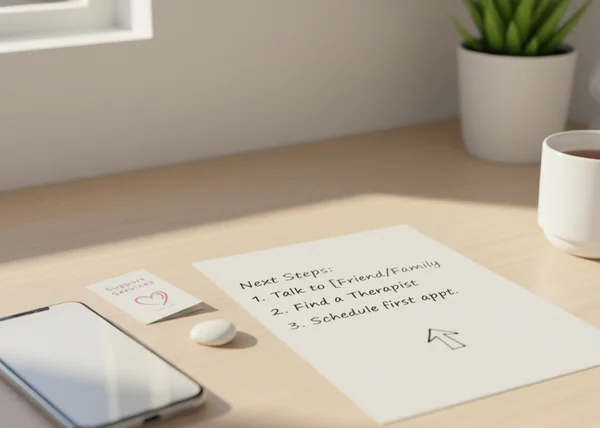
If the pattern is getting harder, use the log to support the next step instead of carrying the whole burden alone. A clearer record can make a conversation with a therapist, doctor, or counselor more specific and less overwhelming.
What matters most is not chasing the perfect LSAS retest date. What matters is noticing when fear and avoidance are narrowing life enough that outside support is worth considering. If the distress is persistent or escalating, seek professional help rather than waiting for the next score to explain everything.
FAQ about LSAS retesting
Should you retake the LSAS right away?
Usually no. A short gap with a few real-life notes often makes the next score more meaningful than an immediate retest.
What if fear is high but avoidance is low?
That can still matter. Some people keep showing up to hard situations while feeling strong internal distress, which is one reason fear and avoidance should be tracked separately.
When should you seek professional support?
Seek professional support when fear or avoidance is strongly affecting work, school, relationships, or daily tasks, or when the distress feels too hard to manage on your own.