Teen Social Anxiety: A Parent’s Guide to LSAS Test Results and Strategies
Recognizing the subtle signs of social anxiety in your teenager can be a challenging journey for any parent. In the modern world, where social media and academic pressure are at an all-time high, many parents find themselves asking: Is my child just naturally shy, or is this something more serious? What might look like a simple "quiet phase" could actually be the beginning of a deeper struggle with social fear.
The Liebowitz Social Anxiety Scale (LSAS) assessment provides parents with an evidence-based tool to help answer these questions. By using a scientific approach, you can move beyond guesswork and start understanding your teen's social anxiety levels with clarity. You’ll discover practical ways to spot the boundary between normal shyness and social anxiety, while showing you how to use tools like our social anxiety test to support your child's development.
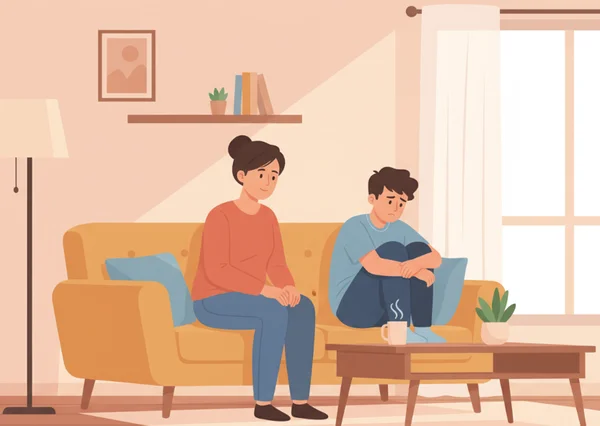
We believe that early awareness is the most powerful gift a parent can give. By understanding the specific situations that cause your teen distress, you can create a roadmap for their growth and confidence.
Understanding Social Anxiety in Teens
Adolescence is a period of massive change. Teens are trying to find their identity while navigating complex social hierarchies. Because of this, some level of social "awkwardness" is expected. However, social anxiety goes much deeper than being a little nervous before a presentation.
The Threshold Between Normal Growth and Clinical Anxiety
Shyness is usually a personality trait. A shy teen might be slow to warm up to new people, but they eventually feel comfortable. They might prefer a small group of friends over a large party, but they do not experience physical illness or intense dread at the thought of social interaction.
Social anxiety, on the other hand, is driven by a profound fear of being judged, embarrassed, or rejected. While a shy teen might feel "quiet," a socially anxious teen feels "trapped." If your child consistently avoids school events, stops talking to friends, or shows extreme distress before simple social tasks, it is time to start your test to see if they meet the criteria for social anxiety.
Recognizing the Warning Signs of Social Anxiety in Adolescents
Warning signs in teens are often different from those in adults. Because teens are still developing their emotional vocabulary, their anxiety might come out as irritability or physical symptoms.
Physical vs. Behavioral Symptoms in Teens
Keep an eye out for these common red flags that often manifest in the home or school environment:
- Physical complaints: Frequent stomachaches, headaches, or muscle tension before social events or school.
- Extreme self-consciousness: An obsession with how they look or what they said, even in very minor interactions.
- Avoidance behavior: Making excuses to miss parties, extracurricular activities, or even school.
- Hypersensitivity to criticism: Taking even mild feedback or a joke from a peer as a devastating personal attack.
- Limited eye contact: Difficulty looking at others while speaking, or speaking in a very low, muffled voice.
The Impact of Untreated Social Anxiety on Teen Development
Social anxiety is not just about "feeling nervous." If left unaddressed, it can significantly hinder a teenager's development. Socializing is how teens learn essential life skills like conflict resolution, empathy, and cooperation.
Avoiding social interactions can spiral into isolation. Over time, teens may withdraw from friends, lose confidence, or battle depression. Taking the first step and learning to track progress with our LSAS score tracker can help prevent these long-term challenges by identifying the problem early.
The LSAS Assessment: Your Tool for Understanding Teen Social Anxiety
When parents suspect their child is struggling, they often don't know where to turn. This is where the Liebowitz Social Anxiety Scale (LSAS) becomes an invaluable resource.
What is the Liebowitz Social Anxiety Scale (LSAS)?
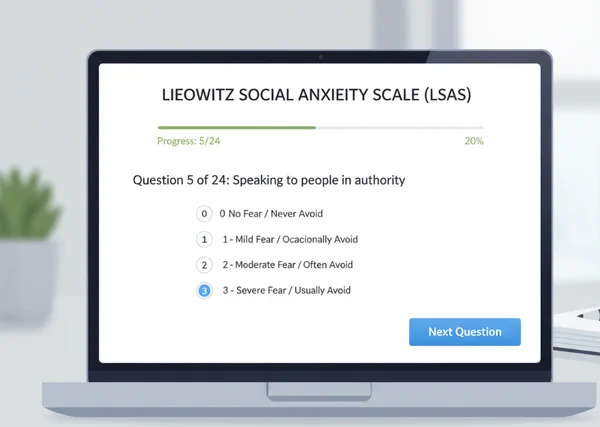
The LSAS was developed by Dr. Michael Liebowitz, a renowned psychiatrist and researcher. It is considered the "gold standard" in clinical settings for measuring social anxiety. Unlike simple "yes or no" quizzes, the LSAS looks at 24 specific social and performance situations.
The scale measures two distinct things: Fear (how anxious the person feels in the situation) and Avoidance (how often they try to stay away from the situation). By measuring both, the LSAS provides a multi-dimensional view of how anxiety affects a person’s life.
Why the LSAS is Particularly Useful for Assessing Teen Social Anxiety
The LSAS is unique because it covers a wide variety of "real world" scenarios that teens face every day. From "talking to people in authority" (like teachers) to "eating in public places" (the school cafeteria), the questions resonate with the adolescent experience.
For parents, the LSAS is helpful because it transforms vague worries into measurable data. It gives you a specific score that can be used to track progress over time or to provide clear information to a pediatrician or therapist. You can use our online LSAS assessment to begin this process from the comfort of your home.
How to Administer the LSAS Assessment to Your Teen
Administering the test requires a sensitive approach. You want your teen to be honest, which means they need to feel safe and not judged.
- Choose the right time: Pick a moment when your teen is calm and not rushed.
- Explain the "Why": Tell them you want to understand how they feel so you can support them better, not because there is something "wrong" with them.
- Offer Privacy: Some teens prefer to answer the questions themselves on a phone or laptop. Others might want you to read the questions to them.
- Be Patient: Let them take their time. You can try our free tool which usually takes about 2-5 minutes to complete, but the conversation around it might take longer.
Interpreting LSAS Results for Teen Social Anxiety
Once the test is complete, you will receive a score. Understanding what these numbers mean is the next crucial step in helping your teen.
Understanding LSAS Scoring: From Mild to Severe Social Anxiety
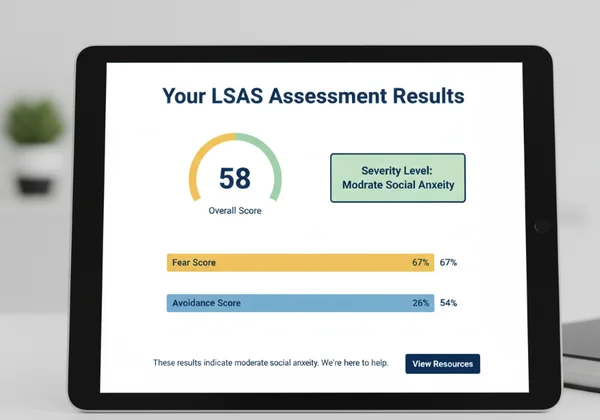
The LSAS score ranges from 0 to 144. Here is a general breakdown of how to interpret the results for a teenager:
-
30–51 (Mild Social Anxiety): Your teen likely experiences some discomfort in specific situations but generally manages to function.
-
52–81 (Moderate Social Anxiety): Anxiety is likely interfering with their social life or school performance. They probably avoid several types of social interactions.
-
82–95 (Severe Social Anxiety): This level of anxiety is very distressing. Your teen likely avoids most social situations and may feel significant physical symptoms of panic.
-
95+ (Very Severe Social Anxiety): Anxiety is likely constant and debilitating, making it difficult for the teen to attend school or maintain friendships.
What Your Teen's LSAS Results Mean for Daily Life
A score is just a number until you apply it to daily life. For example, if your teen has a high "avoidance" score but a lower "fear" score, it might mean they have already developed a habit of staying away from things to keep their fear at bay.
The LSAS pinpoints anxiety 'hot spots.' For example, if your teen fears presentations but chats easily with peers, focus support on school tasks like class participation. To get a clearer picture, you can see your results immediately after finishing the test on our site.
When to Consider Professional Help Based on LSAS Scores
The LSAS is a screening tool, not a medical diagnosis. However, it is an excellent "bridge" to professional help. If your teen scores in the "Moderate" to "Severe" range, it is highly recommended to share these results with a mental health professional.
A therapist can use these results to jump-start treatment, such as Cognitive Behavioral Therapy (CBT). Bringing a printed report to an initial consultation can save weeks of assessment time, allowing the therapist to see exactly where your teen is struggling most.
Supporting Your Teen Based on LSAS Insights
Knowledge is power. Once you have the insights from the assessment, you can begin to make positive changes at home.
Practical Strategies to Help Your Teen Navigate Social Situations
Help your teen face their fears in small, manageable steps. This is often called "graded exposure." If they are afraid of ordering food at a restaurant, start by having them ask for a napkin first.
Shifting focus outward eases anxiety. Instead of monitoring their heartbeat, ask your teen: 'What color are their eyes? What’s their tone of voice?' This simple shift helps break the cycle of self-monitoring.
The Role of AI-Generated Analysis in Understanding Your Teen's Social Anxiety Patterns
We offer more than just a basic score. Our platform provides an optional, AI-driven deep analysis report. This report takes your teen's specific answers and analyzes their unique patterns.
For example, the AI might notice that your teen’s anxiety is specifically linked to "unfamiliar people" rather than "authority figures." This level of detail is incredibly helpful for parents who want to provide targeted support. You can generate your teen’s personalized LSAS analysis to uncover these hidden patterns and receive actionable growth suggestions.
Creating a Supportive Environment at Home for Socially Anxious Teens
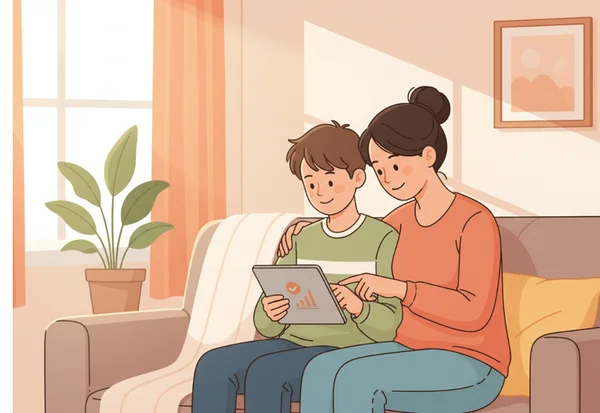
The home should be a safe harbor. Avoid pushing your teen too hard into "scary" situations without a plan, as this can lead to more trauma.
Building a Step-by-Step Action Plan
- Validate their feelings: Say, "I can see that this is really hard for you," instead of "Just get over it."
- Model social behavior: Let them see you interacting with neighbors or making phone calls in a relaxed way.
- Praise effort, not just success: If they attend a club meeting but don't talk to anyone, praise them for the courage it took just to go.
Your Next Steps in Supporting Your Teen's Social Development
Helping a teenager through social anxiety requires patience, empathy, and the right tools. By distinguishing between shyness and anxiety, using the LSAS assessment, and creating a supportive home environment, you are giving your teen the best chance to thrive.
While social anxiety feels overwhelming, remember that small steps lead to big changes. Consider Sarah, a 15-year-old who practiced ordering coffee daily—a simple habit that built her confidence. Your teen’s journey starts with understanding where they stand today. Use our social anxiety test today to gain the scientific insights you need. Whether the result is a mild score or a more severe one, you will finally have the data to move forward with confidence. Your teen doesn't have to face this alone, and neither do you.
FAQ Section
How do I know if my teen's shyness is actually social anxiety?
The main difference lies in the level of "impairment." Shyness is a preference for quiet or small groups. Social anxiety involves an intense fear of judgment that prevents a teen from doing things they want or need to do (like going to school or talking to friends). To get a better idea, you can have your teen take our free assessment.
Is the LSAS assessment suitable for all teenagers?
The LSAS is generally suitable for older children and teenagers who can understand and reflect on their own feelings. For younger children, parents might need to help explain some of the scenarios. It is an excellent tool for adolescents (ages 13-18) because the scenarios reflect common social challenges in that age group.
What should I do if my teen's LSAS score indicates severe social anxiety?
If the score is severe (usually above 80), the best step is to consult a mental health professional or a school counselor. You can use the detailed results from our site to show the professional exactly which areas are most distressing for your teen.
Can I administer the LSAS test myself at home, or should a professional do it?
You can absolutely use our assessment tool at home as a primary screening tool. It is designed to be user-friendly and accessible. While a professional diagnosis requires a clinical interview, the home test is the perfect "first step" to help you decide if professional help is necessary.
Disclaimer: The LSAS test is an assessment tool for informational purposes and does not constitute a medical diagnosis. Please consult with a qualified healthcare professional for any mental health concerns.