Sociophobia Meaning, Social Phobia, Social Anxiety, and What Helps
Sociophobia is an older, less common name many people use when they are trying to understand fear, tension, or avoidance in social situations. You may also see related phrases such as social phobia, social anxiety, mild social anxiety, or social anxiety disorder. The words can feel clinical, but the question behind them is usually very human: "Why do ordinary interactions feel so hard for me?" If you want a private way to organize those patterns, a private LSAS self-reflection tool can help you notice where fear and avoidance show up, while still keeping the result educational rather than a clinical label.
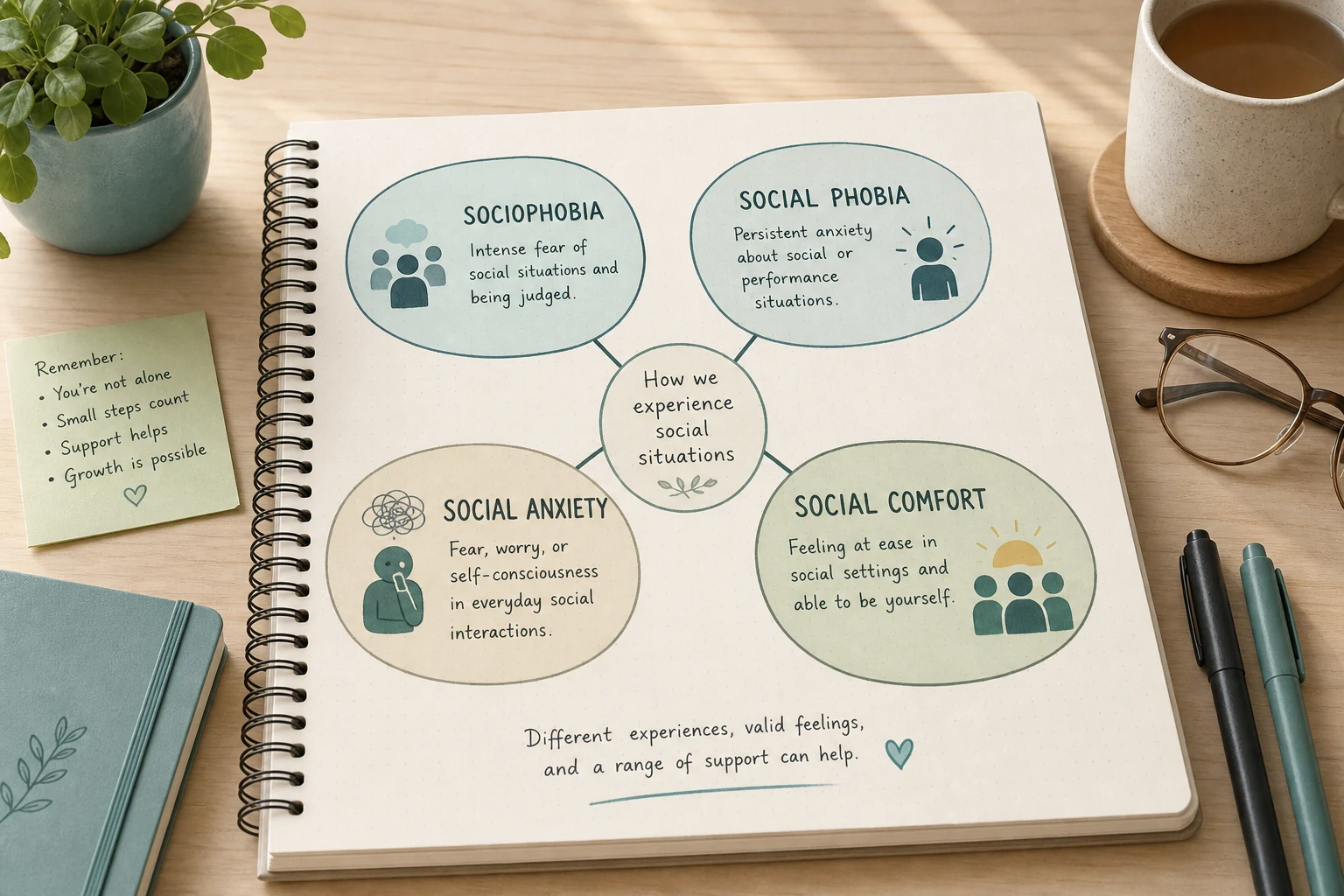
What Sociophobia Means
Sociophobia literally points to fear connected with social life. In everyday search behavior, people often use it to mean fear of being judged, watched, embarrassed, rejected, or exposed in front of other people. That fear may appear before a meeting, during a conversation, after sending a message, while eating in public, or when imagining a future social event.
The term is not always used consistently. Some writers use sociophobia as a synonym for social phobia, the older name for what many health organizations now call social anxiety disorder. Other people use it more loosely for a strong fear of social contact. Because of that, it is better to treat sociophobia as a starting word, not as a final answer.
The most useful question is not "Which label fits perfectly?" It is "What happens in my body, thoughts, and behavior when I face social situations?" A person might notice a racing heart, shaky voice, sweating, blanking out, replaying conversations for hours, or avoiding events even when part of them wants to go. Those details are often more useful than the name alone.
Sociophobia vs Social Phobia vs Social Anxiety
Social phobia and social anxiety are closely related terms. Social phobia is the older name. Social anxiety is the more common everyday phrase. Social anxiety disorder is the formal clinical term used when fear and avoidance are persistent, distressing, and disruptive enough to meet professional criteria.
Sociophobia usually overlaps with those ideas, but it is less standard. If you search for "social phobia name" or "social phobia vs social anxiety," you are probably seeing the shift in terminology. Many modern resources prefer social anxiety because it sounds less like a single narrow fear and more like a pattern across thoughts, body sensations, behavior, and self-evaluation.
There is also a difference between social anxiety and anthropophobia, or fear of people. Social anxiety is typically about being evaluated in social or performance situations. Anthropophobia is often described as fear of people themselves, regardless of whether a specific social judgment is happening. The two can overlap, but they are not identical.

Examples of Social Fear in Daily Life
An example of sociophobia might be intense dread before introducing yourself in a group. Another might be avoiding phone calls because you fear sounding awkward. Some people feel most anxious in performance moments, such as presentations, interviews, or speaking up in class. Others feel anxious in ordinary interactions, such as joining a lunch table, making small talk with a neighbor, or asking a store employee for help.
The pattern can also be subtle. Mild social anxiety may look like over-preparing for conversations, declining invitations at the last minute, staying quiet even when you have something useful to say, or feeling drained because you are constantly monitoring your posture, face, voice, and words. It may not be visible to other people, but it can still take real energy.
Physical symptoms can make the loop stronger. A person may worry about blushing, sweating, trembling, nausea, a pounding heartbeat, or a shaky voice. Then the fear of those symptoms becoming visible creates more anxiety, which makes the sensations more noticeable. In some situations, the anxiety can rise into a social anxiety panic attack, where fear peaks quickly and feels hard to control for a short time.
Avoidance is understandable because it brings quick relief. The problem is that avoidance can also teach the brain that the situation was truly unsafe. Over time, a shrinking social world may make each future interaction feel bigger than it needs to feel.
Why the Name Alone Is Not Enough
Looking up "what is sociophobia" can be helpful, but naming the fear is only the beginning. Two people can use the same word and mean very different experiences. One person may fear public speaking but feel comfortable with close friends. Another may handle work meetings but avoid parties. A third may feel anxious mainly after social events, replaying tiny moments and imagining criticism.
Context matters. Social anxiety can appear alongside other experiences, including autism, panic symptoms, low mood, general worry, trauma history, or perfectionism. For autistic people, social strain may also involve sensory overload, masking, uncertainty about unwritten social rules, or repeated negative feedback from others. That does not mean every autistic person has social anxiety, or that every socially anxious person is autistic. It means the "why" behind social difficulty deserves careful attention.
This is also why a professional evaluation can matter when symptoms are intense, confusing, or interfering with work, school, relationships, or basic daily tasks. A licensed clinician can consider duration, impact, other conditions, and possible care options. Online reading and self-screening can support that conversation, but they should not replace it.
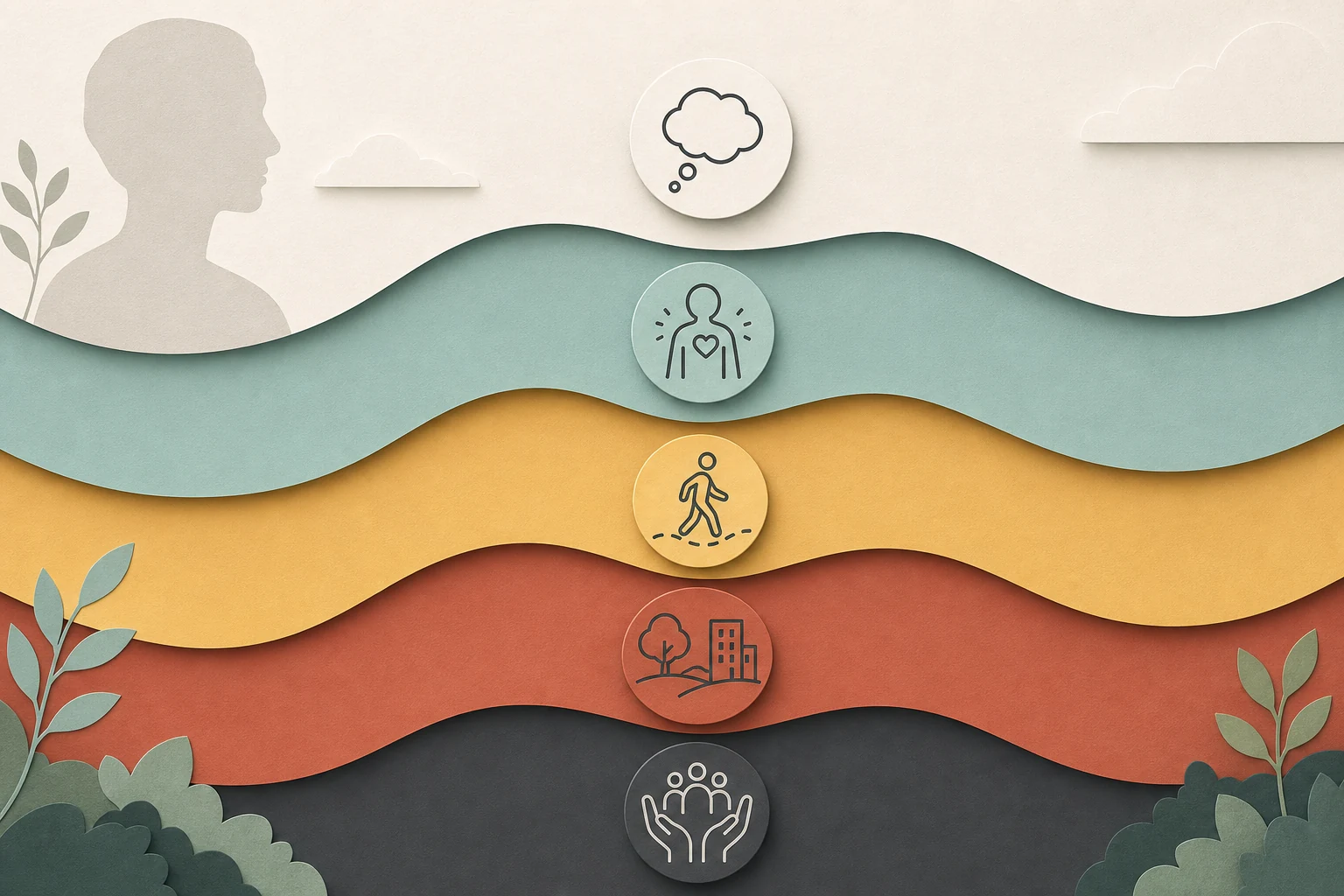
How Social Anxiety Help Usually Works
Social anxiety help often starts with understanding your own pattern. What situations trigger fear? What do you predict will happen? What safety behaviors do you use, such as rehearsing, avoiding eye contact, speaking very little, over-apologizing, or escaping early? What do those strategies cost you later?
CBT for social anxiety often focuses on this loop between thoughts, sensations, behaviors, and after-the-fact self-criticism. A CBT approach may help you test predictions, reduce safety behaviors, build realistic coping statements, and gradually practice feared situations in small steps. The goal is not to become a different person. It is to give your nervous system repeated chances to learn that a social moment can be uncomfortable without being dangerous.
Guided self-help can also be useful for some people, especially when it is structured and realistic. You might keep a short diary of triggers, rate fear and avoidance separately, or break a challenge into smaller steps. For example, "go to a party" may become "reply to the invitation," "arrive for twenty minutes," "say hello to one person," and "leave without replaying the entire night for an hour."
Medication for social anxiety is sometimes part of care, but it should be discussed with a qualified healthcare professional who can consider your medical history, symptoms, risks, and preferences. An article can explain that medication exists as one possible option; it should not tell you what to take.

A Practical Reflection Checklist
Use this checklist as a gentle way to organize what you notice. It is not a score and not a clinical conclusion.
- Which situations create the most anticipatory worry: speaking, eating, dating, work meetings, school, phone calls, authority figures, or casual small talk?
- What do you fear others will notice or think?
- What body sensations show up first?
- What do you do to feel safer in the moment?
- Which situations do you avoid completely?
- What has avoidance protected you from, and what has it cost you?
- Are there places where anxiety is mild enough to practice in small steps?
- Would support from a therapist, doctor, counselor, or trusted person make the next step safer?
If your answers show that fear and avoidance are affecting daily life, you do not need to wait until everything feels severe before seeking support. It is reasonable to ask for help when the pattern is limiting your choices, exhausting you, or keeping you isolated.
Using LSAS to Understand Sociophobia Patterns
The Liebowitz Social Anxiety Scale separates two things that often blur together: fear and avoidance. That distinction is helpful because a person may feel intense fear but still push through, or they may avoid so automatically that the fear is hidden until a situation becomes unavoidable.
LSAS-style reflection looks at common social and performance situations, then asks how much fear and avoidance show up. This can give you a clearer language for conversations with a professional or for your own self-monitoring. For example, you may discover that performance situations are more difficult than casual interactions, or that avoidance is strongest in one-on-one conversations even when fear ratings seem moderate.
If internal links are limited to the homepage, the best fit is to use the homepage as a broad entry point rather than pretending there are separate pages available. You can explore a structured LSAS screening experience when you want a private snapshot of fear and avoidance patterns, with the important reminder that a screening tool is educational support, not a replacement for qualified care.
When to Seek More Support
Consider reaching out to a qualified professional if social fear feels overwhelming, lasts for months, leads to repeated avoidance, affects school or work, harms relationships, or comes with panic attacks, depression, substance use, self-harm thoughts, or a sense that life is getting smaller. If you may harm yourself or someone else, seek urgent local emergency support.
For less urgent situations, you might start with a primary care doctor, mental health professional, campus counselor, employee assistance program, or local talking therapy service. You can bring notes about triggers, symptoms, avoidance, duration, and what you have already tried. That makes the conversation more concrete and can reduce the pressure to explain everything perfectly in the moment.
Good support should feel collaborative. It may include education, CBT, gradual exposure practice, group therapy, medication discussion, or help with related concerns. The right path depends on the person, the context, and the level of impact.
A Gentle Next Step for Social Comfort
Sociophobia can sound like a fixed identity, but it is more useful to view it as a signal: something in your social world feels threatening enough that your mind and body are trying to protect you. That protection may be understandable, even when it starts limiting your life.
A small next step might be writing down one situation you avoid, rating the fear and avoidance separately, and choosing a practice step that is slightly uncomfortable but not overwhelming. You might also review your own LSAS-based reflection to see whether your pattern is mainly performance-based, interaction-based, or mixed.
The aim is not instant confidence. The aim is a clearer picture, kinder language for yourself, and a path toward social comfort that can include professional help when you need it.

FAQ
What is the meaning of sociophobia?
Sociophobia generally means fear related to social situations or social contact. In many online resources, it overlaps with social phobia or social anxiety. Because the word is used inconsistently, it is best treated as a starting term for understanding fear, avoidance, and distress in social settings.
What is an example of a social phobia?
One example is intense fear of speaking in front of others because you expect judgment, embarrassment, blushing, shaking, or criticism. Another example is avoiding group meals, conversations, dates, meetings, or public tasks because the possibility of being watched feels overwhelming.
What is the difference between social phobia and social anxiety?
Social phobia is the older name, while social anxiety is the more common modern phrase. Social anxiety disorder is the formal clinical term used by professionals when the pattern is persistent and significantly affects life. In everyday writing, social phobia and social anxiety are often used to describe the same broad experience.
Is mild social anxiety still worth paying attention to?
Yes. Mild social anxiety may not stop your life, but it can still shape choices, energy, and confidence. Paying attention early can help you notice triggers, reduce avoidance, practice gradually, and ask for support before the pattern becomes more limiting.
Can social anxiety cause panic attacks?
Social anxiety can sometimes rise into panic-like episodes, especially in situations where a person fears visible embarrassment or being unable to leave. If panic symptoms are recurring, intense, or confusing, a healthcare professional can help sort out what is happening and what support may fit.
How does a person deal with social anxiety?
Helpful steps often include learning your triggers, reducing avoidance gradually, practicing realistic self-talk, using relaxation skills, considering CBT, and seeking professional support when symptoms interfere with life. The most sustainable plan is usually gradual, specific, and compassionate rather than forceful.
What about social anxiety and autism?
They can overlap, but they are not the same thing. Autistic people may experience social stress for many reasons, including sensory load, masking, past negative experiences, or uncertainty about social rules. Some may also have social anxiety. Careful, individualized support matters.