LSAS AI Report: How Our Analysis Outperforms Generic Social Anxiety Tests
Have you ever taken an online quiz that gave you a simple score but left you wondering, "What does this number actually mean for me?" When it comes to understanding something as personal as social anxiety, a generic score is often not enough. It tells you what but rarely explains why. This gap between a number and genuine self-understanding is where many standard social anxiety tests fall short.
At our platform, we believe in providing more than just a score. We use the scientifically validated Liebowitz Social Anxiety Scale (LSAS) as a foundation, but we take it a crucial step further. By integrating advanced AI, we offer a personalized analysis that transforms your results into a meaningful roadmap. This article explores how our unique AI report provides the depth and context that generic tests miss, empowering you with truly actionable insights.
If you're ready to move beyond a simple number and gain a deeper understanding of your social comfort, you can start your free test on our platform. Discover what personalized analysis can reveal about you.
Why Generic Social Anxiety Tests Fall Short
Many online tools offer a quick assessment of social anxiety. While well-intentioned, these tests often provide surface-level results. They measure symptoms but don't connect them to your unique experience. This can make the results more confusing than helpful.
The Problem with One-Size-Fits-All Assessments
Most generic tests use a one-size-fits-all approach. They process your answers through a rigid scoring system that doesn't change based on your situation. Whether you're a student giving presentations or a professional in meetings, the interpretation stays the same. This method ignores the rich context of your life—your background, your specific challenges, and your personal strengths.
This generic model can lead to several problems:
- Lack of Nuance: It can’t distinguish between mild shyness in one situation and significant fear in another.
- Vague Feedback: Recommendations are often too general to be useful, like "try to relax more in social settings."
- Misinterpretation: Without context, a score can be easily misinterpreted, causing unnecessary worry or false reassurance.
A number alone doesn't capture the full picture of your social landscape. It's like a map with no landmarks—you know your location, but you don't know the terrain.
Missing Context: Why Standard Scores Aren't Enough
A standard score from the LSAS—or any other scale—is a valuable starting point. It provides a clinical benchmark of severity. However, that score doesn't explain the patterns behind your answers. What specific situations trigger your anxiety most? Are you more fearful of performance situations (like public speaking) or interactional ones (like making small talk)?
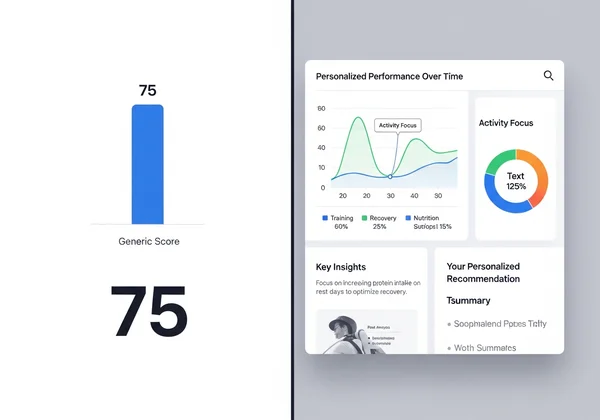
A standard score can't tell you:
- Which of the 24 LSAS scenarios are your primary triggers.
- The relationship between your fear and avoidance levels.
- How these patterns impact different areas of your life, from work to relationships.
- Your unique strengths and areas for potential growth.
Without this deeper context, a score is just data. To turn that data into wisdom, you need a more sophisticated, personalized analysis. This is precisely where our AI-powered approach makes a difference.
The AI Approach: Science Meets Personalization
Our goal with our service is to bridge the gap between a scientifically validated assessment and a truly personal understanding. We combine the reliability of the 24-question LSAS framework with the analytical power of AI to deliver insights that are both accurate and uniquely yours.
How Our AI Analyzes Beyond the 24 LSAS Questions
The standard LSAS test is the foundation of our assessment. However, our optional AI report goes further by inviting you to share additional, non-mandatory background information. Our intelligent system then cross-references this information with your answers to the 24 core questions.
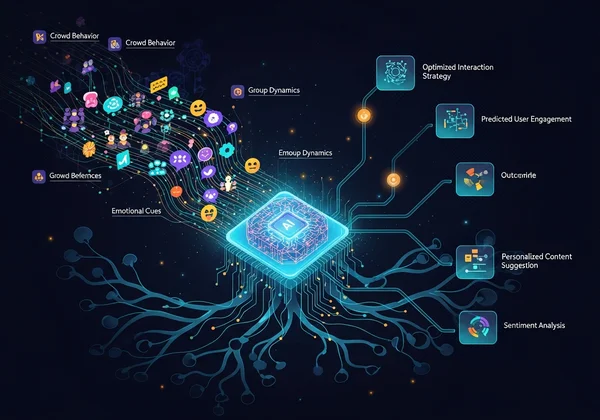
Our AI does more than just count points. It looks for connections and themes in your responses. It analyzes how your experiences shape your reactions to different social situations. This creates a detailed profile of your social comfort—a level of insight that a simple score could never provide. You can try our free tool to see the initial results for yourself.
Pattern Recognition: Identifying Your Unique Anxiety Triggers
One of the most powerful features of our AI analysis is its ability to perform advanced pattern recognition. It sifts through your responses to identify your most significant anxiety triggers and avoidance behaviors.
Instead of just telling you your score is "moderate," the AI report might highlight that:
- Your fear is highest in situations involving authority figures.
- You tend to avoid unstructured social gatherings, like parties.
- While you fear formal speeches, you show confidence in one-on-one conversations.
By pinpointing these specific patterns, the report provides a clear and focused picture of your challenges and strengths. This level of detail makes self-reflection more productive and provides an excellent foundation for discussing your experiences with a mental health professional.
Clinical Validation: More Than Just Algorithm Magic
We understand that trust is paramount when dealing with mental health. Our AI analysis isn't just "algorithm magic"—it's a system grounded in established psychological principles and designed to provide clinically relevant insights. We are committed to transparency and scientific rigor.
The Research Behind Our AI Analysis Methods
Our AI models are developed based on extensive research in psychology and data science. The algorithms are trained to recognize patterns that mental health experts look for when interpreting LSAS results. This includes identifying clusters of symptoms, differentiating between performance and interaction anxiety, and understanding the behavioral impact of avoidance.
We continuously update our analytical framework to align with the latest research in social anxiety and cognitive-behavioral therapy (CBT). The goal is to ensure that the insights provided are not only personalized but also consistent with evidence-based psychological practice. The report is a tool for understanding, not a diagnosis, but it is built on a foundation of scientific knowledge.
Case Studies: How Therapists Use Our Reports in Practice
Mental health professionals are increasingly using tools that help clients articulate their experiences more clearly. Our AI report serves as an effective "icebreaker" and organizational tool for therapy. A therapist can use the report to quickly understand a client's primary triggers and challenges.
For example, a report might reveal that a client's main difficulty is "fear of being the center of attention." This allows the therapist to immediately focus on relevant therapeutic strategies. The structured insights save valuable time in initial sessions and empower clients to communicate their struggles with greater clarity and confidence. Preparing for professional consultation is one of the key benefits you can gain when you take the assessment.
What Makes Our AI Report Truly Unique
In a world full of online quizzes, our AI report stands apart by delivering genuine depth and utility. It’s designed not just to inform, but to empower. The key difference lies in its commitment to personalized, actionable insights over generic, passive feedback.
The Four Dimensions of Personalized Analysis
Our AI report provides a comprehensive breakdown of your results across four key dimensions, offering a holistic view that a single score cannot:
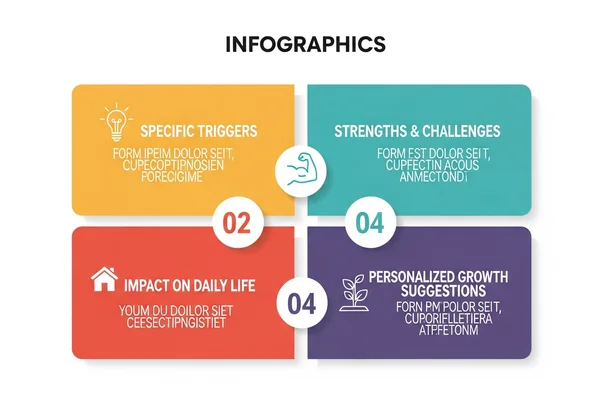
- Specific Triggers: It identifies the exact social situations from the LSAS questionnaire that cause you the most fear and avoidance.
- Strengths & Challenges: It highlights areas where you show social comfort alongside your primary difficulties, providing a balanced perspective.
- Impact on Daily Life: It analyzes how your social anxiety patterns may affect your professional, academic, and personal life.
- Personalized Growth Suggestions: Based on your unique profile, it offers tailored, actionable steps you can consider for personal growth.
This multi-dimensional approach ensures you receive a nuanced and constructive analysis that reflects who you are.
Actionable Insights vs. Generic Recommendations
Many generic social anxiety tests end with vague advice like "practice deep breathing" or "seek professional help." While this advice isn't wrong, it isn't particularly helpful without context.
Our AI report, in contrast, provides actionable insights directly linked to your results. For instance, if your report identifies a strong fear of speaking to people in authority, your growth suggestions will be tailored to that specific challenge. It might suggest strategies for preparing for meetings with a manager or role-playing assertive communication. This transforms your results from a simple label into a practical starting point for change. You can get your analysis and begin your journey toward better understanding.
Your Journey to Deeper Self-Understanding Starts Here
Social anxiety affects everyone differently. That's why a simple score can't capture your unique challenges. Our AI tool respects your individual experience by providing personalized insights that actually connect to your life. Generic tests can offer a glimpse, but they often leave you with more questions than answers.
Our AI report goes beyond generic scores. It combines the scientifically validated LSAS framework with smart analysis to create a personalized map of your social world—identifying exactly what triggers your anxiety, where your strengths lie, and practical steps you can take. It’s the difference between being told your destination and being handed a personalized GPS to guide you there.
Don't settle for a one-size-fits-all assessment. Take the next step toward genuine self-awareness.
Start your free LSAS assessment today and unlock your personalized AI report to see the difference for yourself.
Frequently Asked Questions
How accurate is the AI analysis compared to human interpretation?
Our AI analysis is designed to replicate the systematic process a trained clinician might use to interpret LSAS results by identifying patterns and themes. While it provides highly structured and objective insights, it is not a substitute for the nuanced, empathetic understanding of a human professional. It's best used as a preparatory tool to enhance self-awareness before seeking professional advice.
Can the AI report replace therapy or professional consultation?
Absolutely not. Our report is a powerful informational and self-exploration tool, but it is not a diagnostic instrument or a replacement for therapy. We strongly encourage users to share their reports with a qualified mental health professional for proper diagnosis and guidance. Our goal is to bridge the gap between self-discovery and professional help.
How does the AI ensure my privacy and data security?
We are deeply committed to your privacy. All test results and optional data are handled with strict confidentiality. Our systems use robust security measures to protect your information, and we have a clear privacy policy outlining how your data is used. Your trust is our top priority, and you can start your test with full confidence in our security practices.
What makes your AI report different from other AI mental health tools?
Many AI mental health tools are chatbots or mood trackers. Our tool is different because it is built upon a specific, clinically recognized assessment—the Liebowitz Social Anxiety Scale. It focuses on providing a deep, structured analysis of a specific psychological construct rather than general conversation. This makes our report exceptionally focused, detailed, and relevant for understanding social anxiety.
How current is the research that informs the AI analysis?
Our system is built on a foundation of established psychological principles related to the LSAS and cognitive-behavioral theory. We have a dedicated team that regularly reviews and integrates findings from current research in computational psychology and mental health to ensure our analytical models remain relevant, accurate, and helpful.