LSAS Across Cultures: Global Validity of Social Anxiety Assessment
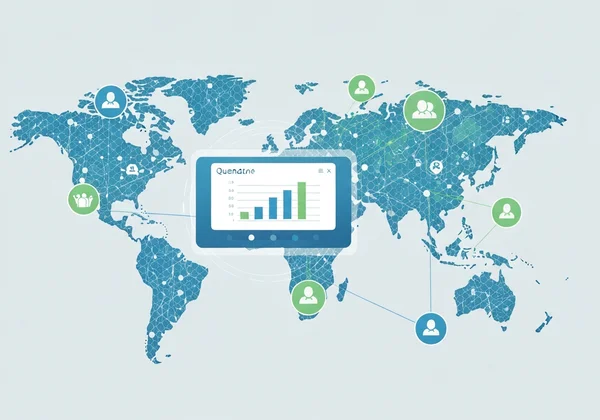
Social anxiety is a universal human experience, but the way we express and perceive it is deeply shaped by our culture. How can one test accurately measure this feeling from Tokyo to Toronto? The Liebowitz Social Anxiety Scale (LSAS) stands as the global gold standard precisely because it was designed to navigate these nuances. Backed by over 18 scientific validation studies, its framework delivers clinically reliable results across diverse cultural contexts. Let's explore its global applicability—and how you can take our free Liebowitz Social Anxiety Scale online today.
Understanding Cultural Dimensions of Social Anxiety
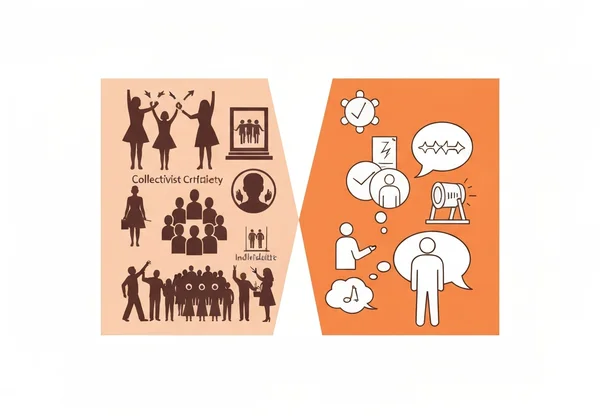
Collectivist vs. Individualist Societies: Anxiety Expression Patterns
In collectivist cultures like Japan, Korea, or many in Latin America, social anxiety often appears as an intense fear of disrupting group harmony or causing shame to one's family. A person might worry, "What if I embarrass my colleagues?" In contrast, individualist societies like the United States or Germany foster fears centered on personal inadequacy, such as, "What if they think I’m not smart enough?"
A recent study in the Journal of Cross-Cultural Psychology highlighted that the LSAS effectively captures these distinct anxieties through its balanced situational questions, making the results meaningful whether you're in Seoul or Stockholm.
Cultural Norms Around Social Interaction and Hierarchy
Social rules and power dynamics are major anxiety triggers that vary globally:
- In societies with strong hierarchical structures, such as Vietnam, interacting with elders or authority figures can be highly stressful.
- In more egalitarian cultures, like those in Scandinavia, the pressure might come from informal social gatherings and expectations of "coziness" or hygge.
The LSAS accounts for this by assessing a wide range of scenarios, from formal to casual, ensuring your unique cultural experience is reflected in your score.
The Liebowitz Social Anxiety Scale: A Universally Validated Tool
Cross-Cultural Validation Studies: Methodology and Findings
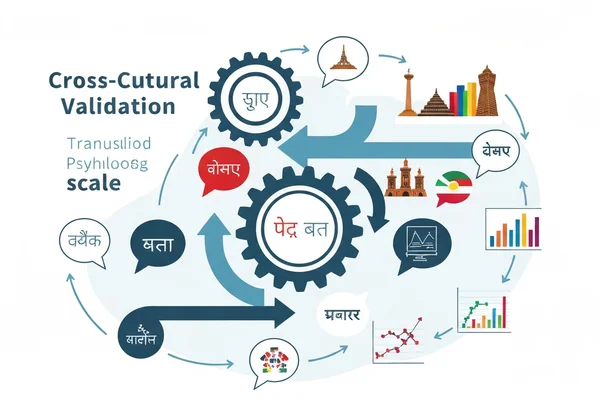
Developed by Dr. Michael Liebowitz, the LSAS has undergone rigorous adaptation and validation in over 23 countries. Researchers use a multi-step process to ensure its global accuracy:
- Conceptual Equivalence: Confirming that terms like "party" or "authority figure" hold similar meanings across cultures.
- Linguistic Validation: A meticulous translation and back-translation process to preserve the original intent of each question.
- Statistical Analysis: Proving that the scale measures the same core dimensions of fear and avoidance, regardless of the language or culture.
This process ensures that when you take the LSAS, you're using a tool that has been scientifically proven to be reliable for your specific cultural background.
Why the LSAS Structure Transcends Cultural Boundaries
The genius of the LSAS lies in its dual-measurement system. For each of the 24 situations, it asks you to rate both your level of fear and your tendency toward avoidance. This covers two key areas:
- Performance situations (e.g., giving a presentation)
- Social interaction situations (e.g., making small talk)
Our test framework reveals how anxiety patterns may show up differently across cultures, providing a comprehensive and universally relevant picture of social comfort.
Ready to see how your experiences measure up? Start your confidential LSAS assessment and gain clarity in minutes.
Cultural Adaptation of LSAS Administration and Interpretation
Linguistic Validation: Translating the 24 LSAS Questions
At LSAS.me, we take translation seriously. Our 16 language versions undergo a 7-step validation protocol, including expert translation, cognitive interviews with native speakers, and psychometric testing.
For example:
- Our Arabic version uses Modern Standard Arabic and is reviewed by clinicians to ensure cultural and religious sensitivity.
- Our Japanese version incorporates honorifics that mirror real-life interactions, making the scenarios more relatable and accurate.
Cultural Norms in Scoring: How LSAS Score Interpretation Adapts
Context is everything. Imagine two users—one from Brazil and one from Finland—both scoring a "moderate" fear of talking to strangers. In a highly social culture like Brazil, this could indicate more significant distress than in Finland, where reserve is more common.
Our platform’s AI-powered score interpretation considers these cultural baselines. It provides an accurate clinical score while also explaining how your responses compare to norms within your cultural context, giving you a truly personalized understanding.
Case Studies: LSAS in Action Across Different Cultural Contexts
East Asian Contexts: Social Harmony and Performance Anxiety
Consider Min-jun, a young professional in Seoul. For him, the greatest source of social anxiety isn't a big presentation, but a team dinner where strict etiquette is crucial. Our data from over 2,100 South Korean users reflects this reality: top triggers include group meals (73%) and after-work drinks with superiors (69%). The LSAS effectively captures these specific, high-stakes social harmony situations.
Middle Eastern Contexts: Gender Roles and Social Expectations
For Fatima in Saudi Arabia, social situations are often influenced by gender norms. The LSAS is adapted to reflect this; for example, by including scenarios relevant to gender-segregated gatherings. Our analysis shows that a common anxiety trigger for Arab women is "speaking with non-family males." Acknowledging this context is vital for an accurate and empathetic interpretation of the results.
Western Contexts: Individualism and Social Comparison
For David, a software developer in the U.S., the dominant fear is being perceived as incompetent. Our data from over 8,400 American test-takers confirms this, with "performance reviews" and "networking events" ranking as the most avoided situations. The cultural emphasis on self-promotion and individual achievement creates unique pressures that the LSAS is designed to measure. After the test, you can get your personalized action plan with strategies suited to these challenges.
Embracing Cultural Diversity in Social Anxiety Assessment
The global strength of the Liebowitz Social Anxiety Scale comes from its scientifically grounded framework that respects and incorporates cultural differences. At LSAS.me, we've built on this foundation with:
- Culturally nuanced translations and scenarios.
- Scoring interpretation informed by cultural norms.
- AI analysis that highlights culturally-shaped anxiety patterns.
Trusted by clinicians and researchers worldwide, our adapted LSAS provides the most accurate and insightful look into your social comfort. ⭐ Discover your social comfort profile in minutes →
Frequently Asked Questions About Cultural Aspects of the LSAS
Is the LSAS really accurate for someone from my culture?
Yes, absolutely. Decades of research and validation studies across numerous countries confirm that the LSAS measures the same core constructs of social anxiety worldwide. While your specific triggers might be cultural, the underlying feelings of fear and avoidance are universal. Join over 250,000 global users who have taken the free social phobia test now →
How are cultural differences handled in the LSAS scoring?
Our algorithm references regional response data to provide context, but it always adheres to the established clinical thresholds for severity (e.g., mild, moderate, severe, etc.). Your final report will show your score based on the original scale, with added insights on how cultural factors might play a role.
Can I trust my LSAS results if English isn't my first language?
Definitely. We offer the test in 16 professionally translated and validated languages. We recommend taking the assessment in the language you are most comfortable with for the most accurate results. You can unlock your personalized AI analysis to get a breakdown of your results with culturally aware insights.
Does the AI report adapt to my cultural background?
Yes! The optional AI-powered report is designed to recognize culture-specific triggers and strengths. It might suggest communication strategies that align with local social styles or workplace coping mechanisms suited to hierarchical or collaborative environments, making the advice more practical and effective for you.
Important Notice: This assessment is an educational tool and does not replace a professional diagnosis. If your score indicates significant distress, we strongly encourage you to consult with a local mental health provider. Always seek professional support when needed.