Liebowitz Social Anxiety Scale (LSAS) History: Development & Impact
Have you ever wondered what makes a psychological test the "gold standard" for professionals? It's not just about asking the right questions; it's about a history of careful research, validation, and a deep understanding of the human experience. The Liebowitz Social Anxiety Scale (LSAS) is one such tool, and its story is key to understanding why it remains one of the most trusted assessments for social anxiety today.
This guide explores the fascinating history of the LSAS, from its creation by Dr. Michael Liebowitz to its evolution into a globally recognized instrument. Understanding its origins helps you see why it’s more than just a quiz—it’s a scientifically crafted tool designed to offer meaningful insight. If you're ready to see how this powerful assessment works for you, you can start your free test on our platform.
The Genesis of LSAS: Dr. Michael Liebowitz's Vision
Before the LSAS, the world of mental health lacked a specific, reliable way to measure the nuances of social anxiety. Dr. Michael Liebowitz, a psychiatrist and researcher, saw this gap and set out to fill it, forever changing how we assess and understand this common condition.
Clinical Landscape Before the Liebowitz Scale
In the early 1980s, social anxiety was often broadly defined and poorly understood. Clinicians knew that people experienced intense fear in social situations, but they lacked a standardized tool to measure its severity. Assessments were often subjective, making it difficult to track a patient's progress or compare research findings consistently. There was a clear need for an instrument that could capture the full picture of what was then called "social phobia."
Dr. Liebowitz's Breakthrough in Social Phobia Assessment
Dr. Michael Liebowitz of the New York State Psychiatric Institute recognized that social anxiety wasn't just about fear. It was also about how that fear changed a person's behavior. People would actively avoid situations that triggered their anxiety, and this avoidance was a critical part of the puzzle.
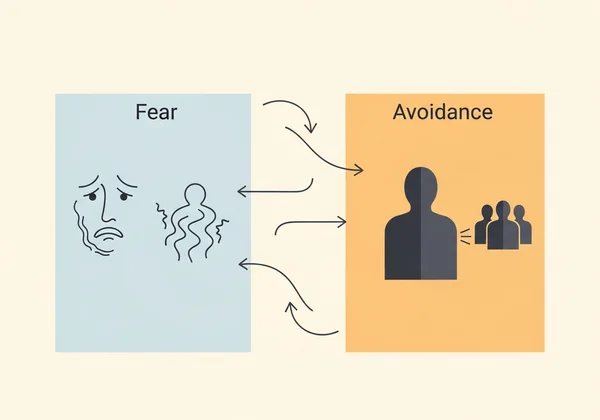
His breakthrough was creating a scale that measured two distinct but related dimensions: fear and avoidance. Dr. Liebowitz published the scale in 1987. It was the first to measure two key parts: fear in social settings and how much people avoid them. This dual-focus approach provided a much richer, more accurate picture of an individual's experience.
Deconstructing the Liebowitz Social Anxiety Scale Structure
The genius of the LSAS lies in its simple yet comprehensive structure. It systematically examines various social scenarios through the lens of its two core dimensions, providing a detailed map of a person's social comfort levels.
Understanding LSAS: Fear and Avoidance Dimensions
The scale is built on the idea that fear and avoidance are interconnected. Someone might feel terrified of public speaking but still force themselves to do it for their job. Another person might feel only moderate fear but will go to great lengths to avoid the situation entirely.
- The Fear Dimension: This part of the scale asks you to rate how much fear or anxiety you feel in a specific social situation. It captures the internal emotional experience.
- The Avoidance Dimension: This part asks you to rate how often you avoid that same situation. It captures the external behavioral response.
By measuring both, the LSAS provides a more complete understanding than a scale that only focuses on fear. It helps identify not just what scares you, but also how that fear impacts your life and choices. You can see how these dimensions play out for you by taking the LSAS online test.
The Original 24 Questions: A Comprehensive Overview
The LSAS consists of 24 questions that describe common social situations. These items are thoughtfully divided into two categories:
-
Social Interaction Situations (11 items): These include scenarios like talking to strangers, participating in small groups, and going to parties.
-
Performance Situations (13 items): These cover activities where you might feel observed or judged, such as giving a speech, working while being watched, or making a phone call in public.
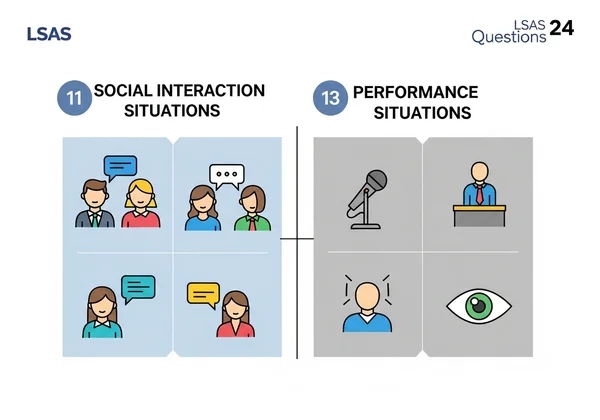
For each of these 24 situations, you provide two ratings: one for your level of fear and one for your level of avoidance. This detailed approach ensures that no stone is left unturned, providing a thorough and reliable assessment of your social anxiety.
LSAS Validation: Scientific Reliability & Evolution
What makes a tool trustworthy? Solid science—and the LSAS has plenty of it. The LSAS has stood the test of time precisely because it has been rigorously studied, validated, and refined over decades, cementing its status as a trustworthy instrument for clinicians and individuals alike.
Psychometric Properties: Early Validation Studies
Soon after its publication, the LSAS was subjected to numerous scientific studies to test its "psychometric properties." Researchers tested it head-on: Does it give steady results? Does it really spot social anxiety?
- Reliability: Does the test give consistent results over time? Studies showed that the LSAS has high test-retest reliability, meaning a person's score remains stable if their condition hasn't changed.
- Validity: Does the test actually measure what it claims to measure (social anxiety)? The LSAS was proven to be highly valid. LSAS scores matched well with other social anxiety tests. They clearly separated people with the disorder from those without.
Evolution of LSAS Scoring and Interpretation
The LSAS scoring system is straightforward yet informative. Each of the 24 items gets a fear score (0-3) and an avoidance score (0-3). These are added up to create a total score ranging from 0 to 144.
Over time, clinical research has established score ranges that correspond to different levels of severity. While these can vary slightly, they generally follow this pattern:
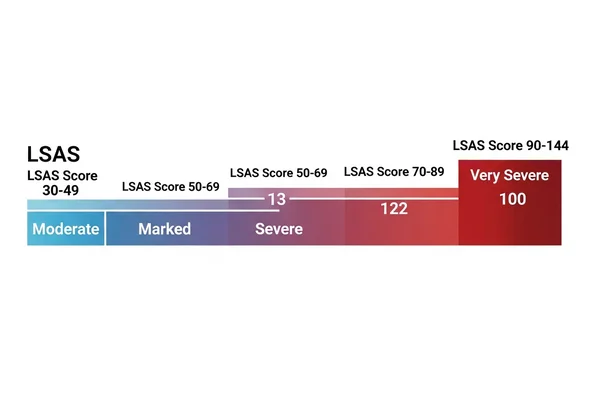
- 55–65: Moderate social anxiety
- 65–80: Marked social anxiety
- 80–95: Severe social anxiety
- >95: Very severe social anxiety
This scoring framework allows individuals and their healthcare providers to get a clear, quantitative measure of social anxiety, which is invaluable for planning and tracking treatment. You can discover your score in minutes with our free tool.
Cross-Cultural Adaptations for Global Use
A true test of a psychological scale's strength is its applicability across different cultures. The LSAS has been translated into dozens of languages and validated for use in countries all over the world. These cross-cultural studies have confirmed that the scale is a reliable tool for measuring social anxiety in diverse populations. This global validation is why our platform is proud to offer the assessment in over 15 languages, making it accessible to a worldwide audience.
The Enduring Impact of LSAS on Mental Health Practice
Decades after its creation, the LSAS remains a cornerstone of mental health practice and research. Its influence can be seen in clinics, universities, and pharmaceutical trials around the globe.
LSAS in Clinical Diagnosis and Research
Clinicians use the LSAS in key ways. It screens for social anxiety disorder. It measures severity. And it tracks progress in therapy. In the world of research, the LSAS is a standard outcome measure in countless studies, including clinical trials for new medications and therapies for social anxiety.
LSAS.me: Making the Gold Standard Accessible
For years, this gold-standard assessment was primarily available in clinical or research settings. At our platform, our mission is to bring this scientifically validated tool directly to you. We provide the full, 24-item Liebowitz Social Anxiety Scale in a simple, confidential, and user-friendly online format.
Finish the test for an instant score and clinical interpretation. We take it further with an optional, AI-powered report that offers personalized insights into your unique social triggers, strengths, and potential areas for growth. We've combined the historical reliability of the LSAS with the power of modern technology to help you on your journey to self-understanding.
Understanding LSAS: Your Next Step to Social Comfort
From a clinician's idea to a worldwide tool, the LSAS proves good science lasts. It has empowered millions of individuals and professionals to better understand and manage social anxiety.
Now, that power is at your fingertips. By understanding its trusted history, you can feel confident in the insights it provides. If you're ready to take a meaningful step toward understanding your own social comfort, your journey starts here.
Take the confidential, free Liebowitz Social Anxiety Scale assessment today and get your results in just a few minutes.
Frequently Asked Questions About the LSAS
What is the Liebowitz Social Anxiety Scale?
The Liebowitz Social Anxiety Scale (LSAS) is a 24-question assessment designed to measure the extent of fear and avoidance in various social and performance situations. It is widely considered the gold standard for evaluating the severity of social anxiety.
How to interpret LSAS scores?
LSAS scores are interpreted based on a total score ranging from 0 to 144. Generally accepted clinical thresholds categorize the severity of social anxiety into levels such as mild, moderate, marked, severe, or very severe. When you complete our test, we provide an instant interpretation of your score.
What are the grades of social anxiety according to LSAS?
The grades of social anxiety are determined by score ranges. While specific cutoffs can vary, a common interpretation suggests that scores above 55 indicate moderate social anxiety, with higher scores representing marked, severe, and very severe levels of social anxiety.
How can I get an LSAS score?
You can get your LSAS score easily and for free. Simply visit our website and take the confidential online assessment. The test consists of 24 questions and takes about 5-10 minutes to complete. Your results are calculated and displayed immediately upon completion. Start your assessment now to get your score.