How to Get Over Social Anxiety: A Step-by-Step Guide
Walking into a room full of strangers can feel like stepping onto a battlefield when you live with social anxiety. Your heart races, your palms sweat, and a voice in your head whispers that everyone is judging you. If this sounds familiar, understand that you are not alone, and your feelings are valid. However, living in constant fear of social interaction does not have to be your permanent reality.
This condition is manageable, and with the right tools, you can reclaim your confidence. This guide goes beyond generic advice like "just relax." Instead, we will explore proven strategies, including cognitive reframing and exposure techniques, to help you understand your triggers. You will also learn how to get over social anxiety by establishing a clear baseline using tools like the LSAS online test to track your personal progress.
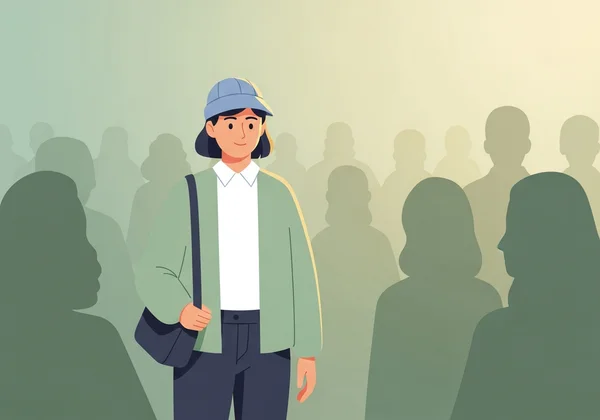
Understand What You Are Dealing With: Shyness vs. Social Anxiety
Before you can fix a problem, you must define it. Many people confuse being shy with having social anxiety, but they are fundamentally different experiences. Understanding this distinction is the first step toward relief.
Shyness vs. Disorder: Knowing the Difference
Shyness is a personality trait. A shy person might feel awkward at a party, but they can still handle the situation. They might warm up eventually, and the feeling rarely stops them from living their life.
In contrast, social anxiety is rooted in fear. It is an intense, persistent fear of being watched and judged by others. This fear often leads to avoidance. You might skip class, call in sick to work, or avoid eating in public because the anxiety is overwhelming. While shyness is uncomfortable, social anxiety can be debilitating and impacts your daily functioning.
Physical and Emotional Signs: It’s Not Just "In Your Head"
Social anxiety triggers a real "fight or flight" response in your body. It is not just an emotional state; it is a physiological one. Recognizing these signs helps you realize that your body is simply reacting to a perceived threat.
Common symptoms include:
- Physical: Rapid heartbeat, sweating, trembling, blushing, nausea, or dizziness.
- Emotional: Intense fear of humiliation, dreading events weeks in advance, or replaying conversations in your head for days afterward.
- Behavioral: Avoiding eye contact, staying quiet to avoid attention, or leaving situations early.
Establish Your Baseline (The Missing Step)
Most people skip this crucial step. They try to "force" themselves to be more social without understanding the severity or specific nature of their anxiety. However, you cannot improve what you do not measure. Establishing a baseline helps you see exactly where you stand today so you can track your improvements tomorrow.
Why You Need a Baseline: Measuring Fear vs. Avoidance
Social anxiety usually manifests in two ways: fear (how anxious you feel) and avoidance (how often you skip situations). You might have high fear but low avoidance, meaning you endure social events despite the pain. Alternatively, you might have high avoidance, meaning you structure your life to stay safe at home.
Knowing the difference is vital. If your issue is primarily avoidance, your recovery plan needs to focus on showing up. If your issue is intense fear, you might need more cognitive strategies to calm your nervous system first.
Identifying Your Specific Triggers: Why One Size Doesn't Fit All
Not all social situations are equal. You might be perfectly comfortable giving a presentation (performance) but terrified of making small talk at a party (interaction). Or, it might be the other way around.
To tackle your anxiety effectively, you need to know your specific triggers. A standardized assessment helps you categorize these triggers objectively, removing the guesswork from your recovery plan.
Take the Free Assessment: Get Your Personalized Breakdown
Before diving into the exercises below, take a moment to get a clear picture of your anxiety profile. Professional psychologists use tools like the Liebowitz Social Anxiety Scale (LSAS) to monitor treatment progress.
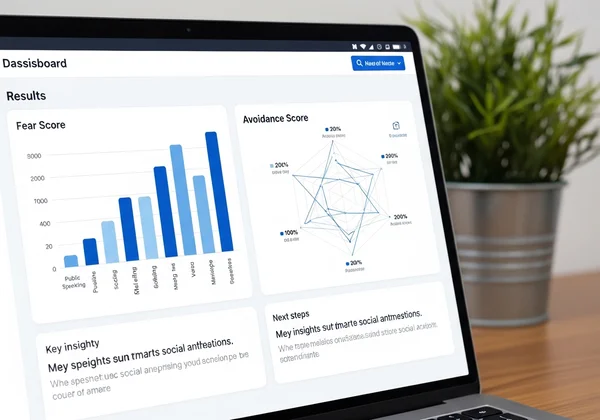
You can use this same framework to understand yourself better. It only takes a few minutes to take the comprehensive social anxiety test. This educational tool provides a personalized breakdown of your fear and avoidance scores, giving you a solid starting point for your journey.
Cognitive Strategies to Rewire Your Negative Thoughts
Once you understand your baseline, the next step involves your mind. Social anxiety often stems from distorted thinking patterns. Cognitive Behavioral Therapy (CBT) techniques can help you identify and challenge these unhelpful thoughts.
Challenging the "Spotlight Effect": Realizing Nobody Is Watching You
One of the biggest drivers of social anxiety is the "Spotlight Effect." This is the belief that everyone around you is noticing your every move, mistake, and awkward moment. You feel like you are on a stage under a bright spotlight.
In reality, most people are focused on themselves. They are worrying about their own appearance, their own conversations, or what they need to buy for dinner. Remind yourself: You are the main character in your life, but you are just a background extra in everyone else's. This realization can be incredibly liberating.
Reframing: How to Turn Negative Self-Talk into Neutral Facts
Anxious brains love to tell stories that aren't true. You might think, "They are looking at me because I look stupid." Reframing involves looking for alternative, neutral explanations.
Try this exercise:
- Negative Thought: "My colleague looked bored when I spoke. She hates me."
- Evidence For: She didn't smile much.
- Evidence Against: It was 4 PM on a Friday. She yawned earlier.
- Neutral Reframe: "She looked tired because it's the end of the week. It likely has nothing to do with me."
Practice this regularly. Over time, your brain will start defaulting to neutral explanations rather than catastrophic ones.
Actionable Exercises Using the "Fear Ladder" Technique
Changing your thoughts is powerful, but changing your behavior creates lasting results. This is where exposure therapy comes in. The goal is not to eliminate anxiety immediately but to prove to your brain that you can survive social situations.
How to Build Your Personal "Fear Ladder" (Step-by-Step Guide)
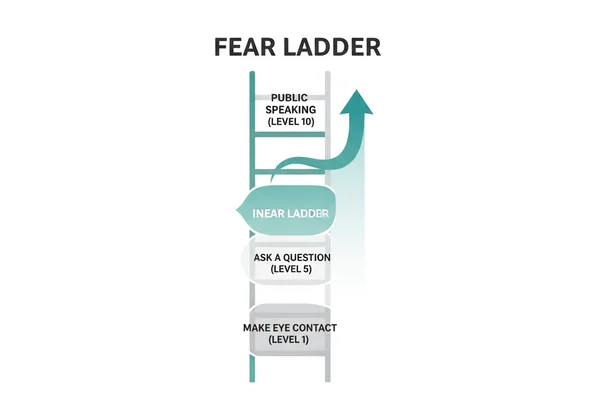
A "fear ladder" (or hierarchy) lists social situations ranked from least scary to most terrifying. You start at the bottom and work your way up.
- Brainstorm: Write down 10 situations that make you anxious.
- Rate Them: Give each a "Subjective Units of Distress" (SUDs) score from 0 to 100.
- Order Them: Arrange them from lowest score to highest.
- Practice: Start with the lowest item. Do it repeatedly until your anxiety drops by half. Only then move to the next rung.
Starting Small: Low-Stakes Exercises for Beginners
If you try to jump to the top of the ladder (like public speaking), you will likely crash. Start small to build momentum.
Level 1 Ideas (Low Anxiety):
- Make eye contact with a cashier and say "Thank you."
- Ask a stranger for the time.
- Like or comment on a friend's social media post.
Level 2 Ideas (Medium Anxiety):
- Ask a question in a small meeting.
- Call a restaurant to ask for their hours (instead of checking online).
- Compliment a colleague on their work.
Tip: Using Your Assessment Results to Pick Your First Challenge
If you completed the assessment in Step 1, look at your report. Identify the situations where you scored high on "Avoidance" but moderate on "Fear." These are often the "sweet spot" for your fear ladder—situations you have been avoiding out of habit but might be able to handle with a little courage.
Immediate Relief: How to Manage Symptoms Fast
Long-term strategies take time, but sometimes you need to know how to get over social anxiety fast when panic hits. When your body enters "fight or flight" mode, you need physiological hacks to calm your nervous system down immediately.
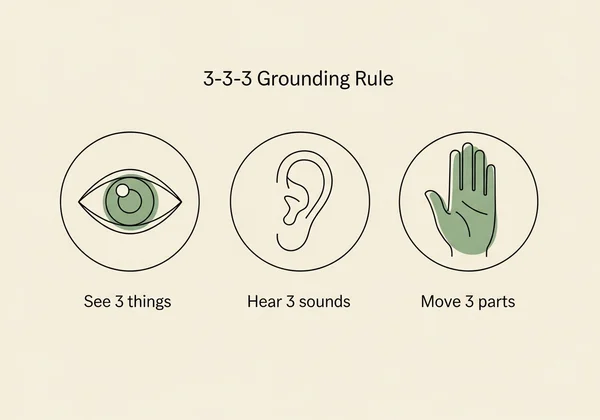
The 3-3-3 Rule: A Quick Grounding Technique
This technique shifts your focus from your internal racing thoughts to your external environment. It is subtle enough to do in a meeting or at a party without anyone noticing.
- Look around and name 3 things you see. (e.g., "Chair, light, plant.")
- Listen and name 3 sounds you hear. (e.g., "Typing, traffic, fan.")
- Move 3 parts of your body. (e.g., "Wiggle toes, roll shoulders, tap fingers.")
Physiological Hacks: Breathing and Muscle Relaxation
Your breath is the remote control for your nervous system. When you are anxious, you take short, shallow breaths. This signals your brain to stay panicked.
Try Box Breathing:
- Inhale for 4 seconds.
- Hold for 4 seconds.
- Exhale for 4 seconds.
- Hold for 4 seconds.
Repeat this cycle four times. It physically forces your heart rate to slow down. Additionally, try dropping your shoulders and unclamping your jaw. Relaxing your body sends a signal to your brain that you are safe.
Managing Specific Scenarios: Work, School, and Public
Social anxiety shapeshifts depending on where you are. Strategies that work at a party might not work in a boardroom. Here is how to handle common high-pressure environments.
At Work: Speaking Up in Meetings and Networking
Work anxiety often centers on competence. You worry that if you speak up, you will sound incompetent.
- Prepare questions: In meetings, write down a question beforehand. Reading it is easier than improvising.
- Focus on the task: In networking, shift your goal from "be impressive" to "be curious." Ask people about their projects. Most people love talking about themselves, which takes the pressure off you.
In Public: Handling Small Talk and Social Events
Small talk can feel excruciatingly awkward. The trick is to lower the bar.
- Be a listener: You don't have to be the most entertaining person in the room. Being a good listener makes you likable.
- Have an exit strategy: Anxiety decreases if you know you aren't trapped. Tell yourself, "I will stay for 30 minutes, and if I'm miserable, I can leave." knowing you have an 'out' often makes it easier to stay.
When is Self-Help Not Enough? (Professional Help)
While self-help strategies are powerful, social anxiety exists on a spectrum. For some, it is a manageable annoyance. For others, it can be severe or "crippling."
Signs Your Anxiety May Require Professional Support
You should consider seeking professional help if:
- You are completely unable to work or attend school.
- You use alcohol or substances to cope with social situations.
- You experience panic attacks that feel uncontrollable.
- Your anxiety is leading to depression or isolation.
Therapy vs. Self-Help: Finding the Right Balance
There is no shame in getting help. Cognitive Behavioral Therapy (CBT) is considered the gold standard treatment for social anxiety disorder. A therapist can provide a safe space to practice exposure and offer personalized guidance that a website cannot. Often, a combination of professional therapy and self-led exercises yields the best results.
Conclusion: Your Journey Starts with Awareness
Overcoming social anxiety is not a switch you flip; it is a muscle you build. It starts with understanding your symptoms, challenging your negative thoughts, and slowly facing the situations you have avoided. Be patient with yourself. Every time you stay in a situation despite the fear, you are rewiring your brain for confidence.
The most important step is the first one: understanding exactly where you are starting from. If you haven't yet, check your anxiety score to gain clarity on your specific triggers. Armed with data and the strategies in this guide, you are ready to reclaim your life.
Frequently Asked Questions
Can you get rid of social anxiety completely?
It is helpful to think of social anxiety as something you manage rather than cure. With practice, the symptoms can fade into the background so much that they no longer control your life. You may still feel a flutter of nerves, but it won't stop you from doing what you love.
How long does it take to get over social anxiety?
There is no set timeline. However, with consistent practice of CBT and exposure exercises, many people see significant improvement within a few months. Consistency is key.
Is medication necessary to overcome social anxiety?
Not always. Many people successfully manage their anxiety through therapy and lifestyle changes alone. However, for severe cases, medication can be a helpful tool to lower the anxiety threshold enough to make therapy effective. Always consult a medical professional for this advice.
What is the difference between introversion and social anxiety?
Introverts recharge alone but can enjoy social interaction without fear. Socially anxious people may want to socialize but are held back by fear. You can be an extrovert and still have social anxiety.