Fear of Large Crowds What Crowd Anxiety Can Mean and How to Respond
If the fear of large crowds makes concerts, busy trains, shopping centers, or packed streets feel harder than they "should," you are not alone in wondering what is happening. Crowd anxiety can come from sensory overload, worry about being trapped, panic symptoms, social self-consciousness, or a past experience that made crowded spaces feel unsafe. This article explains terms people search for, including enochlophobia, ochlophobia, agoraphobia, and social anxiety, without treating a search term as a label for your life. If you are trying to understand your wider social fear and avoidance patterns, a private social anxiety self-reflection tool can be one gentle starting point.
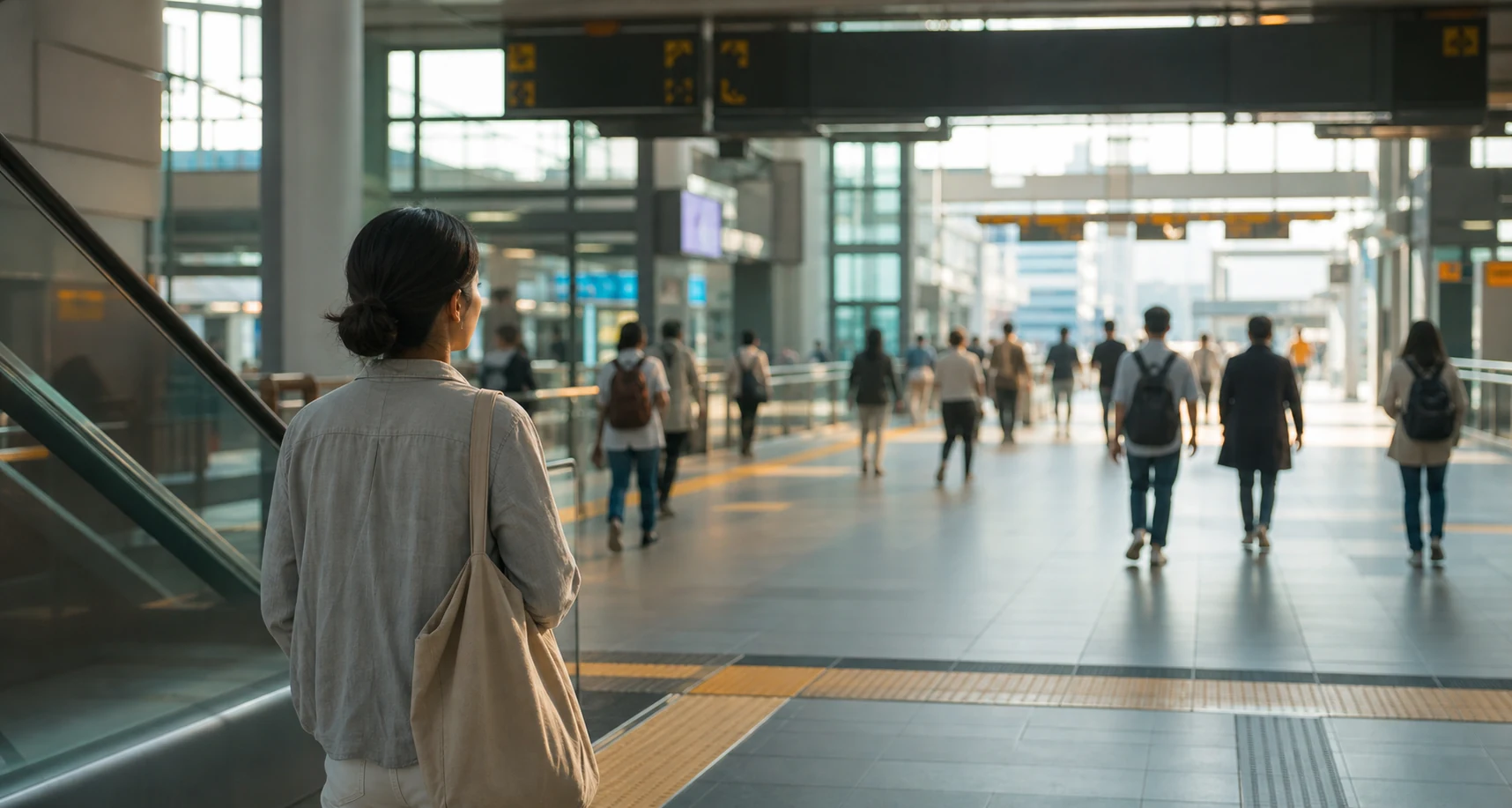
What Is the Fear of Large Crowds Called?
The fear of large crowds is often called enochlophobia. You may see it pronounced roughly as "eh-nok-loh-FOH-bee-uh." Some sources also use ochlophobia, a related term for fear of crowds or mob-like groups. In everyday searching, people may type "crowd phobia," "crowded phobia," "phobia of crowds," or "fear of big crowds" when they mean a similar experience.
These terms can be useful because they give language to a pattern. They do not, by themselves, explain why the fear is happening. Two people can both fear a crowded festival for different reasons: judgment, blocked exits, loud noise, close bodies, heat, or unpredictable movement.
That difference matters because the most helpful next step depends on the center of the fear. A crowd problem may overlap with social anxiety, panic attacks, agoraphobia, sensory sensitivity, trauma reminders, or a specific fear of dense groups.
Why Do Big Crowds Give Me Anxiety?
Big crowds can give you anxiety because they combine several stress signals at once. There may be noise, fast movement, limited exits, strangers close to your body, long lines, unfamiliar layouts, and uncertainty about what happens next. Even when the situation is not objectively dangerous, the nervous system can read those signals as "too much."
Common crowd anxiety triggers include:
- Feeling boxed in or unable to leave easily
- Loud sounds, flashing lights, heat, or strong smells
- Worry that panic symptoms will be visible to others
- Fear of losing control, fainting, vomiting, or needing help
- Being separated from a trusted person
- Having to wait in a line with no quick exit
- Past memories of a frightening or overwhelming crowd
This is why fear of crowds in small spaces can feel especially intense. A packed elevator, subway car, theater row, or narrow store aisle removes the sense of easy movement. Fear of crowds and loud noises can also build quickly because the body has fewer quiet signals to settle around.
It can help to separate the trigger from the interpretation. The trigger might be "the room is packed and loud." The interpretation might be "I will not be able to cope." Naming both can reduce the sense that the fear is one solid wall.
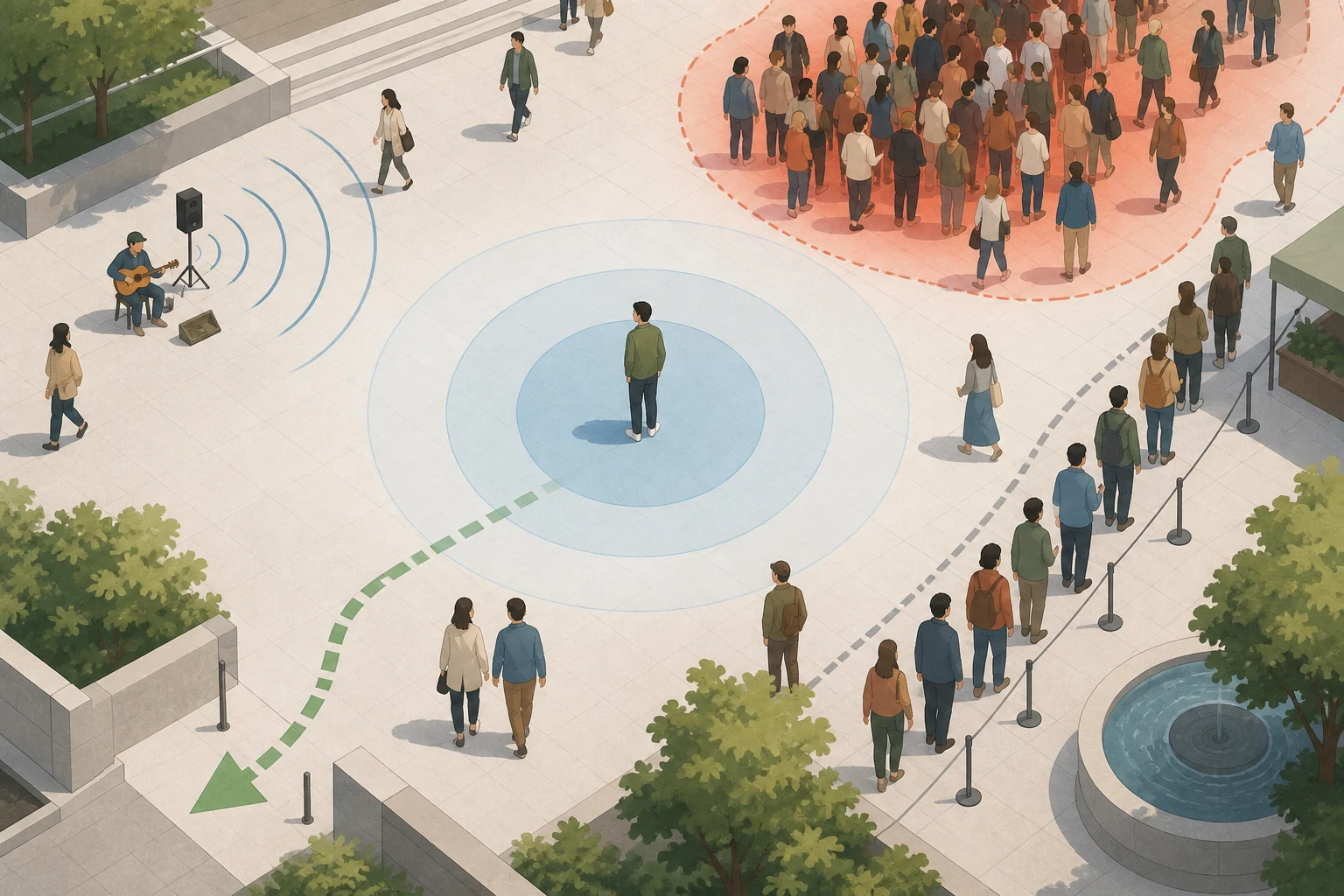
Enochlophobia vs Agoraphobia vs Social Anxiety
Search results often mix enochlophobia vs agoraphobia because crowds can appear in both. The overlap is real, but the focus is different.
Enochlophobia usually describes fear centered on crowds themselves. The crowd may feel unpredictable, too dense, too loud, or hard to move through. The distress can happen even if no one is paying attention to you.
Agoraphobia is more about situations where escape may feel difficult or help may feel unavailable if panic-like symptoms occur. Crowds, lines, public transportation, open spaces, enclosed spaces, and being outside home alone can all become difficult in this pattern. So "agoraphobia fear of crowds" is not wrong, but crowds are only one possible situation within a broader fear of being trapped, helpless, or unable to get support.
Social anxiety is usually centered on negative evaluation. The main fear is being judged, embarrassed, rejected, watched, or noticed while anxious. A person with social anxiety may fear a party because they might have to speak, make eye contact, or be evaluated. A person with crowd-centered fear may fear the same party because the room is packed and the exits feel blocked.
These patterns can coexist. Someone may worry about both being trapped and being judged. LSAS.me focuses on social anxiety, so it is especially relevant when crowd fear includes social scrutiny, performance anxiety, or avoidance of interactions. In that case, reflecting on your responses with an LSAS-based social anxiety check-in may help you notice whether fear and avoidance are mostly social, situational, or both.
Common Fear of Crowds Symptoms
Fear of crowds symptoms can be physical, emotional, cognitive, and behavioral. Physical symptoms may include a racing heart, sweating, trembling, tight chest, shortness of breath, nausea, dizziness, muscle tension, or feeling unreal. These sensations can be frightening, especially if they arrive suddenly in a place where leaving would be awkward.
Emotional symptoms often include dread, irritability, shame, or a strong urge to escape. Cognitive symptoms can sound like "I cannot handle this," "I need to get out," "people can tell I am anxious," or "what if I get stuck?" Behavioral symptoms may include avoiding peak hours, standing only near exits, leaving early, needing a companion, skipping events, or spending a lot of time planning escape routes.
The key signal is not one symptom in isolation. It is the pattern: how often the fear shows up, how intense it feels, how much avoidance grows, and whether your life becomes smaller around crowded places. A simple tracking note can help: situation, crowd size, noise level, exit access, main fear, response, and how long the anxiety lasted.
A Gentle Plan for Crowded Places
Self-help strategies work best when they are realistic and low pressure. The goal is not to force yourself into the most intense crowd and "win." It is to build steadier choices.
Before you go
Choose one manageable situation, not the hardest one. A quiet grocery trip may be a better first step than a sold-out concert. Check the layout, identify exits, choose a time with moderate crowding, and decide how long you plan to stay. If possible, bring one supportive person who understands that the aim is practice, not pressure.
Use a 0 to 10 rating before you enter. If your anxiety is already at an 8, the step may be too big. If it is a 3 or 4, you may have enough room to practice.
While you are there
Stand where you have a clear path, but try not to turn exit-checking into a constant ritual. Slow your breathing by lengthening the exhale. Notice five neutral details around you: floor color, ceiling height, a shelf edge, a jacket color, the temperature of the air. This helps your attention widen beyond threat scanning.
If anxiety rises, see if you can stay for one small extra moment before leaving, as long as you feel safe. If you do leave, leave with kindness toward yourself and note what you learned.
Afterward
Review the event like a curious observer. What was easier than expected? What made it harder? What would make the next step 10 percent more manageable?
When Crowd Fear Is Really About Being Judged
Sometimes the phrase "fear of large crowds" points to a social fear rather than a crowd-density fear. The crowd may matter because it contains many possible observers. You may be less worried about exits and more worried that others will see you blush, shake, sweat, stumble, look awkward, or have nothing to say.
Signs that social anxiety may be part of the picture include avoiding introductions, parties, presentations, group meals, meetings, dating situations, or any setting where you might be evaluated. You might replay conversations afterward or feel intense dread before a social event even when the space itself is not crowded.
This distinction is useful because social anxiety work often focuses on fear of negative evaluation, safety behaviors, attention training, and gradual social practice. Crowd-centered work may focus more on sensory tolerance, exit confidence, panic skills, and step-by-step exposure to density.
When to Consider Professional Support
Consider professional support if fear of crowded places is persistent, escalating, or limiting work, school, relationships, healthcare appointments, travel, or daily errands. It is also wise to reach out if panic symptoms feel unmanageable, if you are avoiding more and more places, or if you rely on alcohol, substances, or rigid rituals to get through public settings.
A licensed mental health professional can help sort out whether your experience is closer to social anxiety, agoraphobia, panic-related avoidance, a specific phobia pattern, trauma-related fear, or another concern. They may discuss cognitive behavioral therapy, gradual exposure, skills for panic sensations, or other evidence-informed options. Medication questions belong with a qualified healthcare professional.
Educational self-reflection can still be useful before or alongside care. If social situations are part of your crowd anxiety, organizing examples of fear and avoidance can make your patterns easier to describe.

Turning Fear of Large Crowds Into Clearer Self-Knowledge
Fear of large crowds can feel confusing because the same setting can involve many fears at once: being trapped, being overwhelmed, being judged, having panic symptoms, or losing the option to leave quietly. You do not need to solve that puzzle all at once. Start by naming the most important fear in the moment, noticing what you avoid, and choosing one small experiment that keeps you within a workable range.
If your fear is mostly about social scrutiny, it may be helpful to explore your broader social anxiety patterns with a private LSAS-style reflection. If it is mostly about escape, panic, or feeling stuck, professional guidance may be especially important. Either way, the aim is to understand your nervous system, protect your wellbeing, and gradually expand the choices available to you.
FAQ
What is it called when you do not like large crowds?
Fear of large crowds is often called enochlophobia, and you may also see the term ochlophobia. In casual language, people often say crowd anxiety or fear of crowds. The name can be useful, but the reason behind the fear matters more than the label.
What is the difference between ochlophobia and enochlophobia?
The terms are closely related and are often used in overlapping ways. Enochlophobia commonly refers to fear of crowds, while ochlophobia is also used for fear of crowds or mob-like groups. In practical self-reflection, it is more useful to ask what part of the crowd feels threatening: density, noise, unpredictability, judgment, or escape difficulty.
Is enochlophobia the same as agoraphobia?
Not exactly. Enochlophobia centers on crowds. Agoraphobia involves fear or avoidance of situations where escape may feel difficult or help may feel unavailable if panic-like symptoms occur. Crowds can be one agoraphobic situation, but agoraphobia can also involve public transport, open spaces, enclosed spaces, lines, or leaving home alone.
Can fear of crowds happen in small spaces?
Yes. Fear of crowds in small spaces can feel intense because density and limited movement combine. Elevators, buses, narrow aisles, theaters, and packed rooms may increase the feeling of being trapped. Planning exits, choosing quieter times, and taking gradual steps can make practice more manageable.
Why do loud crowds feel worse?
Loud crowds add sensory load. Noise, voices, music, announcements, and movement can make it harder to think clearly or notice calming signals. For some people, fear of crowds and loud noises is less about the people themselves and more about overload.
What is hexakosioihexekontahexaphobia?
Hexakosioihexekontahexaphobia is fear related to the number 666. It is not a crowd-related term, but it sometimes appears in People Also Ask boxes because search engines group unusual phobia questions together.
Should I avoid crowds if they make me anxious?
Avoiding every crowd can bring short-term relief, but it may also make your world smaller over time. A gentler approach is to choose manageable, planned exposures while using coping skills and support. If avoidance is significantly affecting your life, consider speaking with a qualified mental health professional.