Your LSAS Score: A 30-Day Plan to Build Social Confidence
You’ve done it. You navigated the questions, reflected on your experiences, and now you have your LSAS Score. Taking that step is a significant act of self-awareness, and it’s completely normal to feel a mix of relief, curiosity, and perhaps a little uncertainty about what comes next. You might be asking yourself, "What are the grades of social anxiety?" and what does this number truly mean for you? Think of your score not as a final verdict, but as a starting point—a personalized map that highlights where you are right now. The real journey begins with the next step.
This guide is designed to be that next step. It’s a practical, empathetic 30-day plan to help you translate your results into meaningful action. We’ll move beyond the numbers and focus on building tangible skills and confidence, one day at a time. Ready to begin? You can always track your progress by revisiting our free lsas test to see how far you've come.
Understanding Your LSAS Score and Starting Your Journey
Before diving into an action plan, it’s crucial to frame your results in a healthy, constructive way. Your score is a tool for understanding, not a label for judgment. This initial phase is all about perspective and self-compassion, which are the foundations for any lasting change, especially after social anxiety test results.
Decoding Your LSAS Score: What It Really Means
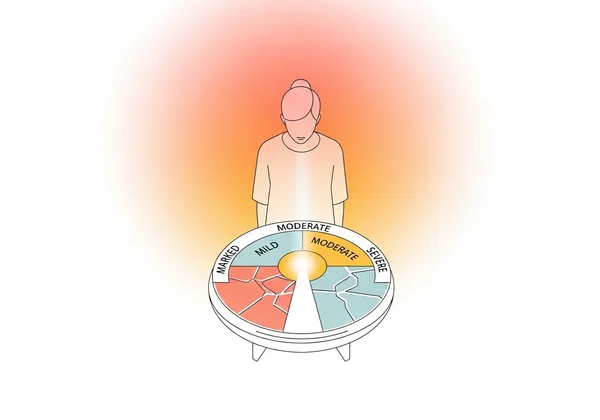
First, let's clarify the lsas score meaning. The Liebowitz Social Anxiety Scale is a respected tool that measures how fear and avoidance in social situations impact your life. Your score provides a snapshot of your current experience, typically categorized into ranges like mild, moderate, marked, or severe social anxiety.
- Mild: You might feel noticeable discomfort in some social settings but can generally navigate them.
- Moderate: Social anxiety is a consistent theme, causing you to avoid some situations you’d otherwise enjoy.
- Marked to Severe: The fear and avoidance are significant, often interfering with your personal, academic, or professional life.
Remember, this is just information. It doesn’t define your potential or your worth. It simply gives you a clearer understanding of the challenges you’re facing, which is the first step toward overcoming them. Understanding your lsas interpretation is about gaining insight, not accepting a limitation.
Embracing Self-Compassion After Your Assessment
Receiving a score that indicates a high level of social anxiety can feel disheartening. It’s easy to fall into a trap of self-criticism. Instead, I invite you to practice self-compassion. Acknowledge the courage it took to seek this information. Social anxiety is not a personal failing; it’s a common and treatable condition that millions of people experience. Your awareness is your greatest asset. Treat yourself with the same kindness and understanding you would offer a friend in the same situation. This mindset will be your anchor throughout the next 30 days.
Key Principles of Your Social Confidence Plan
A successful journey requires a good map. Before we detail the weekly actions, let’s explore the core principles that make this social confidence plan effective. These concepts are rooted in cognitive-behavioral therapy (CBT), one of the most effective approaches for managing social anxiety.
The Power of Gradual Exposure and Small Steps
The idea of confronting social fears can be terrifying. That’s why we don’t start with giving a public speech. The key is gradual exposure: gently and progressively facing situations that trigger your anxiety. By starting with small, manageable steps, you teach your brain that these situations are not as threatening as they feel. Each small victory builds momentum and rewires your response to fear, making the next step feel less daunting. This is the heart of building social skills.

Setting SMART Goals for Social Growth
Vague goals like "be more social" are difficult to achieve. We need clarity. That’s where SMART goals come in:
- Specific: Clearly define what you want to do. Instead of "talk to more people," try "ask one person a question at the grocery store."
- Measurable: How will you know you’ve done it? "Ask one person" is measurable.
- Achievable: Is this realistic for you right now? Don’t aim for a party if a quiet coffee shop feels overwhelming.
- Relevant: Does this goal align with your desire to build social confidence?
- Time-bound: Set a deadline. "I will do this by Wednesday."
Tracking Progress and Learning from Experience
Your journey will have ups and downs. The goal isn’t perfection; it’s progress. Keep a simple journal to note your efforts, what went well, and what you learned. Did you feel anxious? That's okay. Did you survive? Yes. What could you try differently next time? This reflective practice turns every experience into a valuable lesson, reinforcing your growth and resilience.
Your 30-Day Action Plan for Building Social Skills
Here is a structured, week-by-week guide to put the principles into practice. Remember to choose activities that feel like a small stretch, not a giant leap. You can customize this plan based on your unique LSAS score and comfort level. You can always get your score again to measure your progress.

Week 1: Cultivating Low-Stakes Connections
The focus this week is on brief, low-pressure interactions where there are no expectations. The goal is simply to get comfortable being around others in a non-demanding way.
- Day 1-2: Make eye contact and offer a small, genuine smile to three people you pass by (e.g., on the street, in a store).
- Day 3-4: Say "hello" or "thank you" to a cashier, barista, or delivery person while making brief eye contact.
- Day 5-6: Ask a simple, logistical question. For example, ask a store employee where an item is located.
- Day 7: Reflect. How did these small interactions feel? Note any moments of success, no matter how minor.
Week 2: Gently Expanding Your Comfort Zone
This week, we build on Week 1 by adding a bit more engagement. The interactions are still brief, but they require a little more active participation.
- Day 8-9: Give a specific, genuine compliment to someone. "I love your scarf," or "You have a great laugh."
- Day 10-11: At work or in class, ask a colleague or classmate a simple, work-related question.
- Day 12-13: If you're in a virtual meeting, try unmuting to agree with a point someone made ("That's a great idea").
- Day 14: Reflect. Which interaction was the most challenging? What made it so? What did you learn?
Week 3: Navigating Moderate Social Situations
Now it’s time to engage in slightly longer or more interactive scenarios. The key is to keep them time-limited so you remain in control.
- Day 15-16: Plan to stay at a low-key social gathering (like a casual work lunch or a friend's quiet get-together) for a set amount of time, perhaps just 30 minutes.
- Day 17-18: Share a brief opinion or idea in a low-risk setting, like a book club, a friendly team meeting, or an online forum.
- Day 19-20: Initiate a short conversation with someone you know casually. Ask an open-ended question like, "How was your weekend?" and listen to their answer.
- Day 21: Reflect. Celebrate your courage for tackling these situations. Did you notice your anxiety rise and fall? This is a natural pattern.
Week 4: Consolidating Skills and Embracing New Challenges
In the final week, the focus is on reinforcing what you’ve learned and taking on slightly more spontaneous or personal interactions.
- Day 22-24: Plan a one-on-one activity with a trusted friend, like grabbing a coffee or going for a walk.
- Day 25-27: Answer a phone call from an unknown (but expected) number, like a delivery or appointment confirmation.
- Day 28-29: Revisit an activity from a previous week that you found challenging and try it again. Notice if it feels any different.
- Day 30: Reflect on the entire month. What have you accomplished? What skills feel stronger? Acknowledge your progress and decide on one small challenge for the month ahead.
Beyond 30 Days: Sustaining Growth and Seeking Further Support
This 30-day plan is a powerful catalyst for change, but the journey to social confidence is ongoing. The goal is to integrate these practices into your life as sustainable habits.
Recognizing When Professional Help Is Beneficial
A self-guided plan can be incredibly effective, but it’s also important to recognize when you might benefit from professional support. If your social anxiety continues to cause significant distress or impairment in your daily life, seeking help from a therapist or counselor is a sign of strength. Your lsas assessment results can be an excellent starting point for a conversation with a mental health professional, giving them valuable insight into your experiences.

Integrating New Habits into Your Daily Life
Continue to set small, weekly social goals for yourself. Make it a habit to challenge your anxious thoughts. Instead of thinking, "They'll think I'm awkward," reframe it as, "I'm practicing my social skills, and that's something to be proud of." Consistency is more important than intensity.
Celebrating Milestones and Maintaining Motivation
Remember to look back and acknowledge how far you’ve come. Celebrate your wins, whether it was making a phone call without rehearsing for an hour or simply deciding not to avoid a social event. This positive reinforcement fuels your motivation and reinforces the belief that you are capable of growth and change.
Charting Your Path to Lasting Social Confidence
Your LSAS score was the first page of a new chapter. It provided you with valuable self-knowledge. But knowledge is only powerful when paired with action. This 30-day plan is your roadmap to turn that knowledge into real-world confidence. Each small step you take, each fear you face, is a victory that builds upon the last.
Your journey is unique to you. Be patient, be kind to yourself, and remember that progress, not perfection, is the goal. If you want to gain even deeper, personalized insights into your specific triggers and strengths, consider exploring the AI-powered report available after you discover your results. You have the tools and the strength to redefine your relationship with social situations. The journey starts today.

FAQ Section
What is considered severe social anxiety?
Generally, on the Liebowitz Social Anxiety Scale, a score above 80 or 90 is often considered indicative of severe social anxiety. This typically means that feelings of fear and avoidance in social situations are significant and likely interfere with your daily functioning, relationships, and professional or academic life. However, this is not a medical diagnosis and should be interpreted with a healthcare professional.
Do I have social anxiety or am I just shy?
Shyness is a personality trait where a person might feel timid or awkward in new situations but eventually warms up. Social anxiety (or social phobia) is a clinical condition characterized by an intense and persistent fear of being judged or scrutinized by others. This fear is often so strong that it leads to avoidance of social situations and causes significant distress. Taking a validated social anxiety self-assessment can help clarify where your experiences fall on this spectrum.
How to interpret LSAS scores?
LSAS scores are broken down into Fear and Avoidance subscales, with a total score ranging from 0 to 144. The scores are generally grouped into categories: 30-54 suggests mild social anxiety, 55-64 suggests moderate, 65-79 suggests marked, and 80+ suggests severe social anxiety. The interpretation helps you understand the overall impact on your life, but for a full picture, it's best discussed with a professional.
How to get an LSAS score?
You can get an LSAS score quickly and for free by using a reliable online tool. Our website offers the complete, 24-question Liebowitz Social Anxiety Scale. The process is straightforward: you answer a series of questions about various social scenarios, and you receive your score instantly upon completion. You can take the test now to get started.